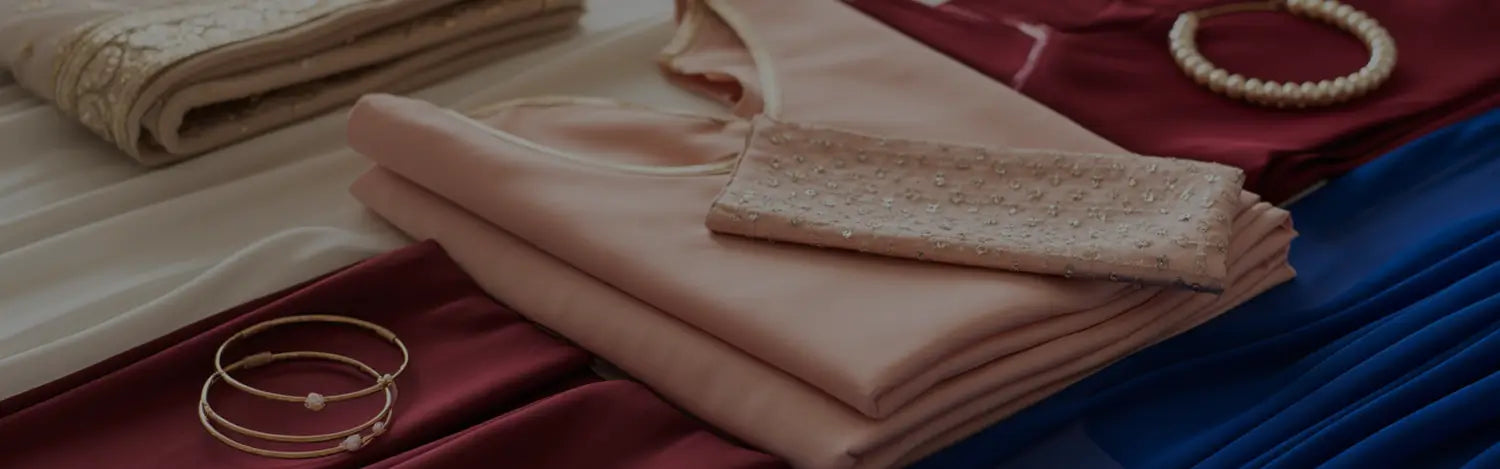

Thread Embroidery vs Sequin Embroidery: Full Comparison
You're standing in a boutique or scrolling through outfits online, and you've narrowed it down to two beautiful pieces. One has rich, textured thread work. The other glitters with sequins. Both look gorgeous in pictures. But which one is actually right for your occasion, your body, and your lifestyle? That's exactly what this guide is here to answer.
The thread vs sequin embroidery debate comes up at every wedding season, and most women end up guessing instead of knowing. Let's change that.
What's the Visual Difference Between the Two?
Thread embroidery has a soft, dimensional quality to it. Think of the way chikankari embroidery sits on cotton or how zardozi work catches candlelight with a warm, muted glow. The texture is raised and tactile. You can feel the craft under your fingertips.
Sequin work is flat, reflective, and bold. Each sequin is a tiny mirror, and hundreds of them together create a look that literally moves with you. It reads as glamorous from 10 feet away. Thread work, on the other hand, rewards closeness. Its beauty is in the detail.
The common mistake here is assuming sequins always look more festive. That's not true. A heavily hand-embroidered anarkali in gold and ivory thread can look far more luxurious than a basic sequin-covered piece. The quality of the embroidery matters as much as the type.
Weight: This Matters More Than You Think
Thread embroidery ethnic wear is generally lighter. A full-embroidered anarkali with thread work can weigh anywhere from 600 to 900 grams depending on the base fabric. You can wear it for a 6-hour function without feeling like you're carrying extra luggage.
Sequin work adds real weight, especially when it's densely packed. A heavily sequined lehenga skirt alone can weigh 1.5 to 2.5 kilograms. Over a full wedding evening, that adds up on your hips and waist.
- Petite women and smaller frames generally feel more comfortable in thread-embroidered pieces for long events
- Full-day functions like mehendi or sangeet: thread work is kinder to your body
- Short evening events of 2 to 3 hours: sequins are perfectly manageable and visually worth it
Most women find that they underestimate outfit weight until they've worn a heavy sequined piece for 5 hours straight. Try lifting the outfit off the hanger before you buy. That weight is what you'll carry all evening.
Which Occasion Calls for What?
| Occasion | Thread Embroidery | Sequin Embroidery |
|---|---|---|
| Daytime wedding functions | Excellent choice | Can look flat or blinding |
| Evening receptions | Beautiful but subtle | Stunning, maximum impact |
| Mehendi / Haldi | Perfect, easy to move | Too formal, risky near turmeric |
| Puja or religious events | Ideal, traditional feel | Too flashy for most settings |
| Cocktail party | Works with bold colour | Natural fit, very contemporary |
Regional preferences are real here. South Indian wedding traditions often favour rich thread-embroidered Kanjeevaram-inspired work on sarees for the main ceremony. North Indian brides and guests tend to gravitate toward heavier sequin lehengas for the baraat and reception. Bengali occasion dressing leans toward intricate thread work on silk, especially in deep reds and off-whites.
If you're shopping for embroidered sarees for a traditional function, thread-based work almost always feels more appropriate and culturally resonant than a sequin-heavy drape.
Care: What You Need to Know Before You Wash Anything
Thread embroidery is more forgiving. Most thread-worked pieces can be hand-washed in cold water with mild detergent, though dry cleaning is always safer for zardozi or heavily hand-stitched pieces. The thread itself doesn't react badly to water, but the base fabric might.
Sequins are fragile. Even one aggressive machine wash cycle can leave you with loose sequins all over the drum and gaps in your embroidery. Always dry clean sequin-heavy outfits. If you must spot-clean at home, use a damp cloth and dab, never rub.
- Store sequin outfits in muslin covers, not plastic bags. Plastic traps moisture and causes sequins to lose their coating over time
- Fold thread-embroidered pieces with acid-free tissue between layers to prevent thread snagging
- Never hang a heavily sequined lehenga skirt by the waistband for long periods. The weight pulls the fabric out of shape
Which Embroidery Actually Lasts Longer?
Honest answer: thread embroidery wins on longevity, particularly hand-done work. A well-maintained hand-embroidered piece can last 15 to 20 years without losing its integrity. Your grandmother's thread-work blouse is probably still wearable. Her heavily sequined disco-era blouse, less so.
Sequins fall off. It's not a design flaw. It's just physics. With regular wear and cleaning, you'll notice sequin loss starting around the 4th or 5th wear, especially at friction points like the underarms, waistband, and dupatta edges.
What actually works is choosing sequin pieces you'll wear 3 to 5 times over a season rather than expecting them to be heirloom pieces. Thread-embroidered pieces are the ones worth investing in for the long term.
For a deeper look at how fabric choice affects embroidery wear and longevity, the Indian ethnic wear fabric guide covers base fabrics that hold both thread and sequin work best.
Budget and Body Type: The Practical Side
Under Rs.2000: You'll mostly find machine-done thread work or lightweight sequin embroidery at this price point. Both can look lovely. Focus on even distribution of the embroidery rather than density.
Rs.2000 to Rs.5000: This range gives you access to better hand-guided machine embroidery in both thread and sequin work. Look for pieces where the sequins are stitched securely rather than just glued on.
Above Rs.5000: This is where you start seeing genuine hand embroidery, mixed thread techniques, and higher-quality sequin work with better staying power. The hand-work anarkali collection is a good example of what careful thread embroidery looks like at this level.
For body type, here's what actually makes a difference. Apple-shaped figures look beautiful in thread-embroidered anarkalis with vertical motif placement because it creates a lengthening effect. Pear-shaped women should look for sequin or thread embroidery concentrated on the upper half, like an embroidered yoke with a plain skirt, to balance proportions. Petite women generally do better with smaller, delicate thread motifs rather than large scattered sequin patches that can overpower a smaller frame.
Hourglass figures genuinely look good in both, but thread embroidery at the waist can emphasise the silhouette in a more refined way than all-over sequin coverage.
So Which One Should You Choose?
Choose thread embroidery if you want longevity, comfort across long events, a traditional or heritage feel, and pieces you'll reach for again and again across different occasions.
Choose sequin work if you want maximum visual impact at an evening event, a contemporary or glamorous aesthetic, and you're comfortable with the care requirements.
The smartest approach for most wardrobes is actually both. A well-chosen thread-embroidered saree or anarkali for daytime and a sequin-touched lehenga or co-ord for evening events covers almost every occasion on the Indian wedding calendar. Browse the full range of hand-work anarkalis if you're starting with thread work, or explore the embroidered sarees if you want to see both styles across a classic silhouette.
The best outfit isn't always the most glittery one. It's the one that fits your body, suits the occasion, and makes you feel completely at ease in it.