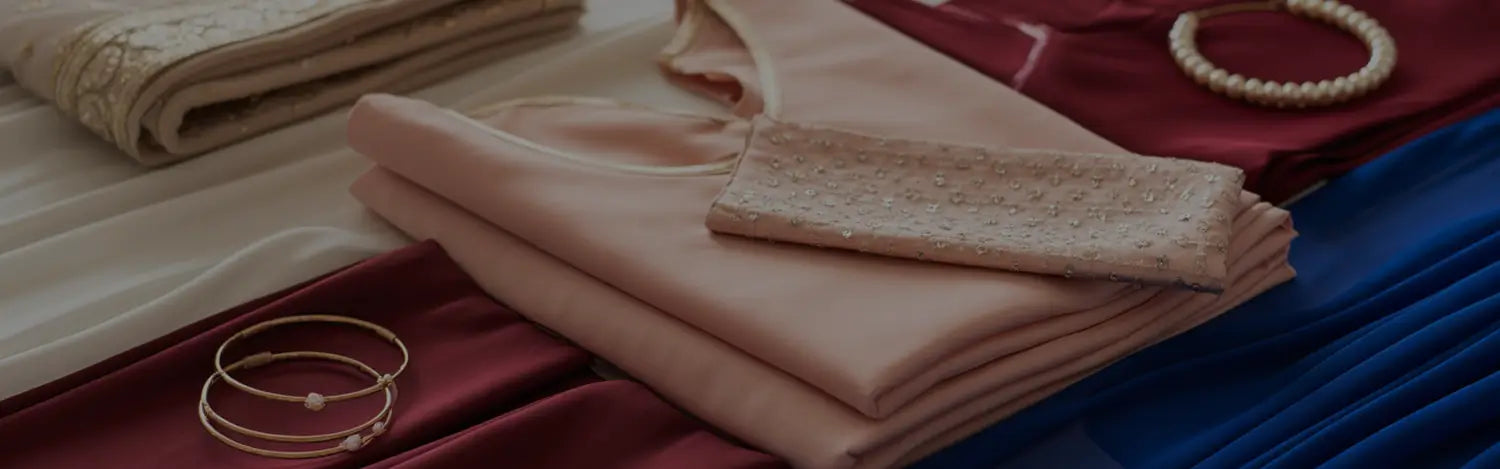

Vichitra Silk vs Georgette: Which Fabric Looks More Premium
Neither Vichitra silk nor georgette automatically looks more premium. Compare the actual garment's finish, embroidery, lining, fit and movement. A fabric name or a higher price cannot tell you which outfit will look better in person.
What Is Vichitra Silk?
Vichitra silk is a retail fabric label, not a reliable statement of fibre composition. Do not assume pure silk, a particular synthetic blend or a fixed weight from the name. Ask for the specific product's composition information if that distinction matters to you.
When comparing an outfit labelled Vichitra silk, look at its surface in daylight and indoor light. Check whether you like the amount of sheen and whether the fabric hangs as you expect. Photographs can show the design, but a close-up and movement video are more useful for judging the actual finish.
What Makes Georgette Different
Georgette is associated with a textured, crepe-like appearance. A listing may specify faux georgette or another composition; those details matter more than assuming every georgette garment feels the same. The fabric label alone does not guarantee breathability, opacity or a particular weight.
The common mistake is assuming georgette looks cheaper than Vichitra silk. It does not follow from the name. Fine stitching, a well-supported embroidered area and a fit you like can make either outfit feel considered. Browse Anarkali styles by silhouette, then read each garment's material and construction details separately.
Vichitra vs Georgette: A Practical Comparison
- Appearance: compare close-ups of the exact colour and finish rather than ranking every shiny fabric above every textured fabric.
- Weight: ask about the complete outfit. Lining, embroidery, flare, canvas and can-can can change how heavy it feels. There is no verified universal percentage difference between these two labels.
- Drape: watch the outfit moving. The cut and support layers can matter as much as the outer material.
- Coverage: check which pieces are lined and whether the sleeves or dupatta are sheer. Our lining and coverage checklist helps you assess each piece.
- Embroidery: inspect backing, seam puckering and the reverse side. Heavy work needs suitable support; neither name guarantees that it will sit flat.
- Comfort: consider the venue, fit, lining, layers and movement you need. Do not assume every georgette set is cool or every Vichitra set is uncomfortable.
Two Real Outfits: Compare Construction, Not Just Labels
These Hansh Couture listings illustrate why the complete outfit matters. They are different designs, not a controlled test of fabric weight or quality. Check the product page for current price, size and colour availability.
Vichitra Silk Anarkali With Support at the Hem
The Heavy NC Vichitra Silk Embroidered Anarkali Suit Set lists a 4-metre flare with can-can patta, a fully stitched Anarkali with cups and a zipper, pants and a 2.20-metre dupatta. The listing specifies dry cleaning. Those construction details help explain the silhouette; the Vichitra silk label does not establish pure-silk content.

Faux Georgette Anarkali With a Koti
The Designer Maxi Anarkali Set lists faux georgette, a 5-metre flare and a micro-cotton inner, with an embroidered koti, pants and dupatta. It also specifies dry cleaning. The extra layer and different flare mean it would be misleading to call it lighter than the Vichitra set without a measured garment weight.

Which Should You Choose for Your Occasion?
For a reception or wedding, choose the finish and silhouette you prefer, then test whether the outfit suits the actual plans. If you will dance, sit for a long ceremony or walk outdoors, check the hem length, arm movement, waist closure and dupatta handling before deciding.
For an outdoor or warm-weather event, ask about the lining and total layers rather than relying on a blanket summer-fabric recommendation. For photography, request pictures or video in lighting similar to your venue. Neither label guarantees a particular result in every photograph.
Fit Matters More Than a Body-Type Rule
You do not need to restrict either fabric to a particular body shape or height. Compare garment measurements with a well-fitting outfit, check ease at the bust and hips, and assess where the waist seam and hem sit on you. Choose the amount of flare and embroidery placement you enjoy.
If alterations are needed, confirm the seam allowance and whether embroidery or borders limit the changes. For a broader comparison of fabric names, composition and construction, see the Indian ethnic wear fabric guide.
Budget and Care: Check the Actual Offer
There is no dependable price threshold at which one of these fabrics becomes better quality than the other. Compare included pieces, lining, finishing, measurements and care requirements. A plain outfit is not automatically inferior to a heavily embellished one.
Follow the finished garment's care label. Both examples above specify dry cleaning, so a general home-wash routine would be inappropriate. Store the garment clean and dry, protect embellishments from snagging, and choose folded or supported hanging storage according to its weight and construction.
Before buying, ask for any missing composition details, close-ups of the seams, a movement video and measurements for each piece. The better choice is the specific outfit that meets your needs, not a universal winner between two fabric names.