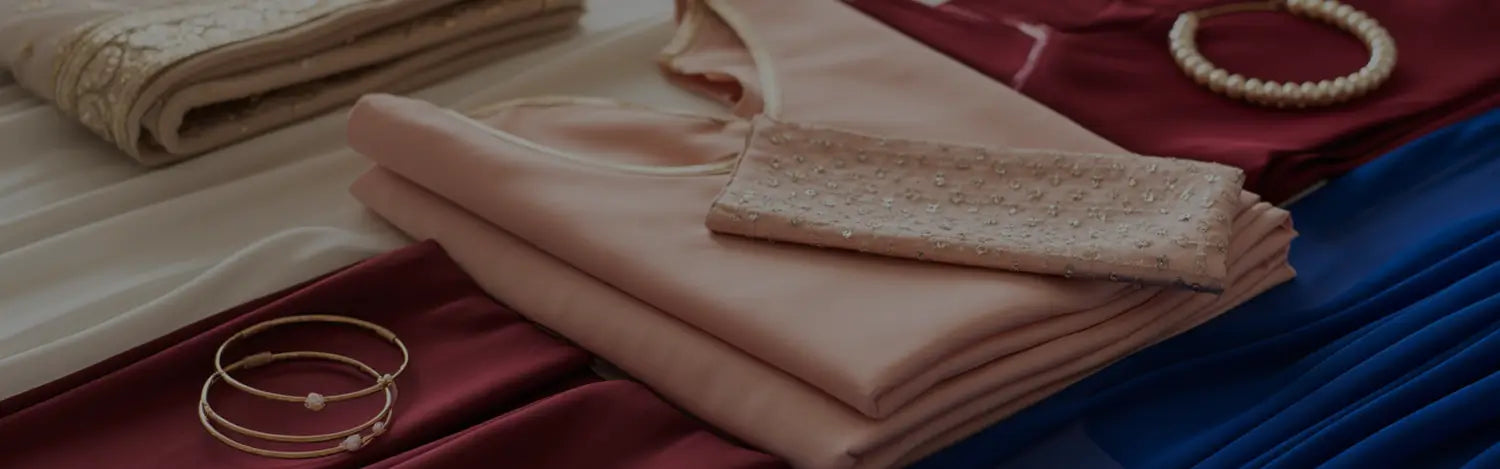

Eid Outfit Planning Guide: Start Preparing 2 Weeks Early
Eid comes once, sometimes twice, a year. Yet every year, the same thing happens. You leave the outfit decision to the last week, find nothing good in your size, settle for something that's just fine, and then spend the entire day feeling slightly underdressed at your own celebration. Two weeks is all you need to avoid that completely.
This guide is your practical, no-panic Eid outfit planning breakdown. From when to place your order, to which colours actually photograph well, to fabrics that won't make you sweat through the afternoon prayers.
Why the 2-Week Rule Exists (And Why It Actually Matters)
Most online orders in India take 4 to 7 business days to arrive. Add a weekend in between, a public holiday, or a high-demand period like the week before Eid, and that window stretches easily to 10 days. If your outfit needs even a small alteration at the hem or blouse, you're looking at another 2 to 3 days with your local tailor.
That's why 14 days is the minimum buffer. Not 14 days to browse. 14 days from the moment you place the order.
The common mistake here is confusing browsing time with ordering time. Women spend 10 days looking at options and then panic-order at day 11. Start your shortlist 3 weeks out, make your final decision by day 14 before Eid, and place the order that same day.
If you want to explore what's available for this season, the Eid special collection at Hansh Couture is a solid starting point. Everything is available in full-stitched options, which cuts out tailor wait time entirely.
What to Order: Outfit Types by Occasion and Body Type
Eid usually involves 3 distinct settings in a single day. Morning prayers, a family lunch or dastarkhwan, and evening visits or a dinner gathering. Your outfit needs to work across at least 2 of these. That means comfort is not optional.
Anarkalis and Long Kurtis
These are the most versatile choice for Eid, full stop. A well-fitted anarkali in a size 34 to 44 covers most body types gracefully. Petite women should look for an anarkali with a slightly higher waist seam, which elongates the silhouette without requiring heels all day. Pear-shaped bodies benefit from the flared lower half that balances wider hips naturally.
Shararas and Palazzo Sets
Shararas have had a serious revival and they deserve every bit of it. The wide-leg palazzo cut looks effortlessly festive, photographs beautifully, and is incredibly comfortable during long sitting periods at the namaz or family meals. Apple-shaped body types tend to find shararas more flattering than fitted salwars because the volume draws attention downward evenly.
Ethnic Co-ord Sets
If you want something that feels modern but still unmistakably festive, an ethnic co-ord set is worth considering. A kurta and matching wide-leg pant in the same print or fabric reads as intentional and put-together with very little effort. Most women find that co-ord sets work especially well for younger women attending college friend gatherings or more casual Eid lunches.
Lehengas
Save the lehenga for an evening celebration or a larger family gathering where you genuinely want to go all out. A semi-bridal lehenga with zardozi work or mirror embroidery is beautiful, but it's not practical for a full day from morning prayers to late-night dessert. Keep the lehenga for the main event and keep the rest of the day comfortable.
For a broader look at how to build a full festive wardrobe across occasions, this Indian festive wear guide covers the full picture well.
The Eid Colour Guide: What Works Beyond the Obvious Pastels
Pastel green is practically the unofficial colour of Eid in India, and for good reason. It photographs beautifully, works across skin tones, and feels appropriately festive without being overpowering. But you have more interesting options.
| Colour | Best For | Skin Tone Tip |
|---|---|---|
| Pastel Mint Green | Day events, family lunches | Works beautifully on wheatish to medium skin tones |
| Ivory and Off-White | Morning prayers, understated elegance | Flatters all skin tones, especially with gold jewellery |
| Aqua Blue | Afternoon visits, outdoor settings | Pops on dusky and deeper skin tones especially |
| Blush Pink | Evening gatherings, dinner settings | Choose dusty rose over baby pink for a more sophisticated finish |
| Emerald Green | Evening events, formal family dinners | Rich and bold, pairs perfectly with kundan or polki jewellery |
| Deep Burgundy | Night gatherings, cooler Eid seasons | Avoid if your skin tone is very warm or reddish-toned |
What actually works is choosing a colour that you genuinely love rather than one you feel obligated to wear. The best Eid outfit is the one you feel like yourself in, not the one that follows a trend list.
Fabric for Eid: Breathable, Beautiful, and Practical
Eid in India usually falls during warm months. Even when it doesn't, the afternoon sun during outdoor gatherings can make heavy fabrics genuinely uncomfortable. Fabric choice is the single most underrated part of Eid outfit planning.
- Georgette: Lightweight, fluid, and holds embroidery well. Best for anarkalis and shararas. Feels almost 40% lighter on the body than raw silk of the same thickness.
- Tissue silk: Has a beautiful natural shimmer without being heavy. Works brilliantly for co-ord sets and kurta sets meant for daytime wear.
- Chanderi: A favourite in Madhya Pradesh and increasingly popular across India, chanderi has a delicate transparent quality with a crisp drape. Ideal for layered dupatta styling.
- Organza: If you want volume and structure in a lehenga skirt without the weight of net, organza is your answer. It photographs like a dream.
- Cotton silk blends: The most practical choice for women who have a full day ahead. Breathable like cotton, looks elevated like silk.
Avoid heavy velvet, bridal net, or thick brocade fabrics unless your entire day is indoors in air conditioning. They photograph beautifully but wear poorly after hour three.
Your 2-Week Eid Outfit Planning Timeline
Here's the actual schedule to follow, broken down simply.
- 14 days before Eid: Browse, shortlist 2 to 3 options, confirm your size and check if full-stitched is available.
- 13 days before Eid: Place your order. Do not wait one more day.
- 7 to 8 days before Eid: Your outfit should arrive. Try it on immediately. Check fit at the shoulders, length, and waist.
- 6 days before Eid: If any minor alteration is needed, take it to the tailor today. Don't leave it for the last 2 days.
- 3 days before Eid: Sort your accessories. Earrings, bangles, mojaris or heels, and your clutch or potli bag.
- 1 day before Eid: Steam or lightly iron your outfit. Hang it. Have everything laid out together so the morning is calm.
Hansh Couture offers free pan-India shipping and full-stitched options starting at Rs.999, which takes the sizing stress out of online ordering completely. Browse the full Eid collection and shortlist your options before the week runs away from you.
Budget Breakdown: Looking Beautiful at Every Price Point
Your budget doesn't determine how good you look. Your choices within that budget do.
- Under Rs.2,000: Focus on a clean georgette anarkali or a simple tissue silk kurta set with minimal embroidery. Let your jewellery do the work. A statement earring can elevate a simple outfit entirely.
- Rs.2,000 to Rs.5,000: This is where you can find genuine quality. Look for chikankari embroidery on georgette, mirror work on shararas, or a printed organza co-ord set with good finishing. This range offers the best value for Eid dressing.
- Above Rs.5,000: If you're attending a larger family event or want a lehenga with proper zardozi or resham embroidery work, this is the range to shop in. Invest in one piece that will last multiple seasons rather than 3 average ones.
The best Eid outfit planning doesn't start with a big budget. It starts early, with a clear idea of where you're going, what you need to feel comfortable, and what you genuinely love wearing. Give yourself the 2 weeks, and the rest becomes easy.