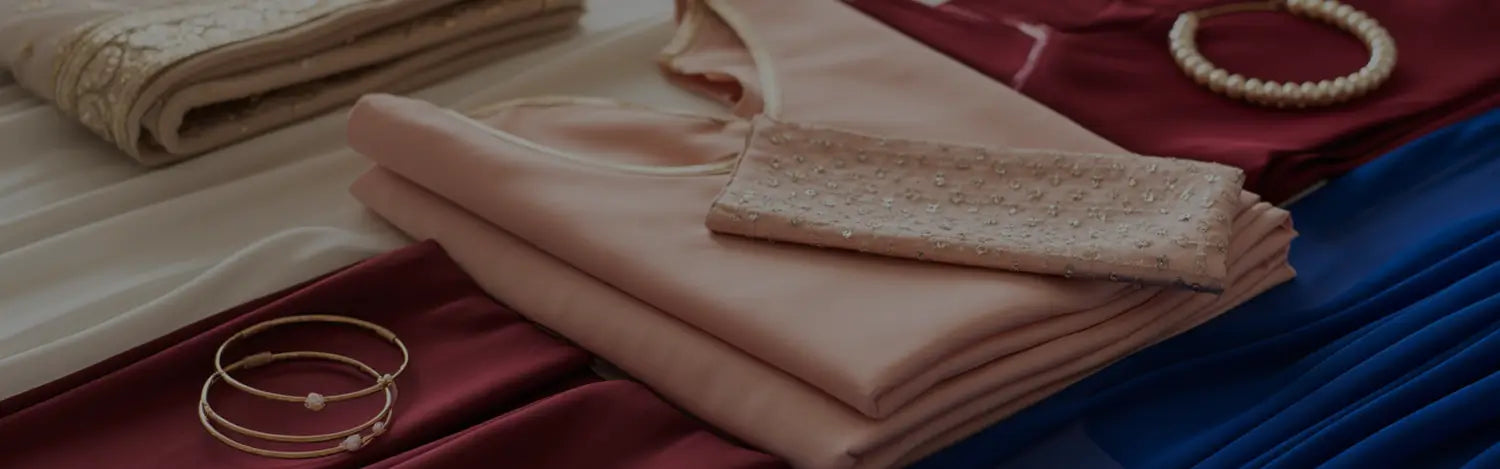

Japan Satin Fabric: What It Is and Which Outfits Use It
Is Japan satin fabric good or bad? It can be a suitable choice for an ethnic outfit if you like its sheen and the particular garment has the right drape, lining and fit. But the name alone is not a quality guarantee. Ask for the fibre composition, care instructions and a close-up or swatch before deciding.
What Exactly Is Japan Satin Fabric?
“Japan satin” is used as a commercial fabric name. It does not, by itself, establish that a fabric was made in Japan, that it contains silk, or that it has a fixed polyester percentage. The reliable answer comes from the specific supplier's composition and origin information, not the name.
Satin describes a weave associated with a smooth, lustrous surface; it is not the name of a fibre. Satin fabrics can have different compositions, as the silk, polyester and other satin listings in Mood Fabrics' satin catalogue illustrate. Those examples explain the distinction, not the composition of a particular Japan satin garment.
If a seller gives only “Japan satin” as the specification, the fibre content, stretch and weight are still unconfirmed. Do not assume a standard GSM, thread count, country of manufacture or quality grade.
Sheen, Weight and Drape: What to Actually Check
Look at a fabric video in daylight as well as indoor light. A satin surface can catch light differently as it moves, and a studio photograph cannot tell you how it will feel against your skin. Ask to see the reverse side and the fabric hanging freely rather than only laid flat.
- Drape: does the actual fabric fall softly or hold a structured shape? Compare that with the silhouette you want.
- Opacity: check the intended colour against light and ask which parts of the garment are lined. A darker colour is not proof of full coverage.
- Stretch: ask whether it contains a stretch fibre and whether the garment measurements allow comfortable movement. Do not infer stretch from a shiny surface.
- Surface condition: inspect for pulled threads, snags, puckered seams or uneven finish. A trade name cannot promise resistance to pilling or damage.
- Comfort: consider the lining, embroidery and fit as well as the outer fabric. Ask about the weight of the complete garment if that matters to you.
For coverage questions, our ethnic suit lining and inner guide explains what to check piece by piece. Lining may be needed for coverage or construction even when the outer fabric looks substantial.
Where Japan Satin Can Be Used in Ethnic Wear
If a product specifically lists Japan satin, assess it for the outfit you intend to wear. The fabric label alone does not make every Anarkali, sharara or dupatta equally suitable.
Anarkali Suits and Long Kurtas
For a flared Anarkali, ask to see the complete skirt moving and check the waist seam, lining and hem length. Extra flare, embroidery or support layers can change the garment's weight. For a straight kurta, check ease at the bust, hips and armholes so the fabric is not pulled across the body.
You can browse Anarkali suits for silhouettes, but read each product's material details separately. That collection contains different fabrics; it is not a Japan satin collection.
Sharara and Palazzo Panels
Look at the cut of the actual bottom and how it moves at the knee and ankle. Check the waist closure, lining and length with your intended footwear. A satin label does not guarantee that a wide-leg garment will avoid clinging, bunching or static.
Dupattas, Overlays and Lehenga Skirts
A lustrous dupatta can contrast with a matte outfit. Before choosing one, check its width, border weight and whether it stays in your preferred drape. For a lehenga, ask how the lining and any canvas or can-can affect the silhouette. The outer fabric is only one part of the construction.
Embroidery and Embellishment Compatibility
Threadwork, sequins and metallic embroidery can create different effects on a satin surface. Choose the contrast you like, but inspect how the work is supported. A smooth face does not guarantee that heavy embroidery will sit flat without pulling.
Ask for close-ups around seams and embroidered areas, and check the reverse for lining or backing that separates embellishment from your skin. If you are having fabric tailored, ask the tailor whether the selected fabric and design need stabilisation before committing to heavy work.
For a wider comparison of fabric labels, construction and composition, see the Indian ethnic wear fabrics guide.
How to Care for Japan Satin Ethnic Wear
Follow the finished garment's care label first. The lining, dye, embroidery, trims and construction may need different care from plain fabric. There is no universal hand-wash routine for everything sold as Japan satin.
- If the garment says dry clean only, do not substitute a home wash or an at-home “dry cleaning” shortcut.
- If washing is permitted, follow the stated temperature, detergent and drying instructions. Avoid assuming that a plain-fabric method is safe for an embellished set.
- Check whether ironing or steaming is permitted and at what setting. Keep direct heat away from delicate trims and use any protection recommended by the label.
- Store the garment clean and fully dry. Choose folded or supported hanging storage to suit its weight and embellishments; a heavy outfit should not hang from straps that distort under its weight.
Deciding Whether It Is Worth Buying
Compare the complete offer: verified composition, lining, workmanship, measurements, included pieces and care requirements. A higher price is not proof of better fabric, and a lower price does not establish poor quality. There is no reliable universal price band for a trade name.
Before ordering, ask: What is the fibre composition? Is every piece lined where needed? Which pieces are stitched? What are the garment measurements? Can I see a close-up and movement video? What does the care label say?
If those details are missing, request them before treating the garment as the right choice for your occasion. A similar-looking satin outfit may use a different fabric, so check its own listing rather than transferring specifications from another product.