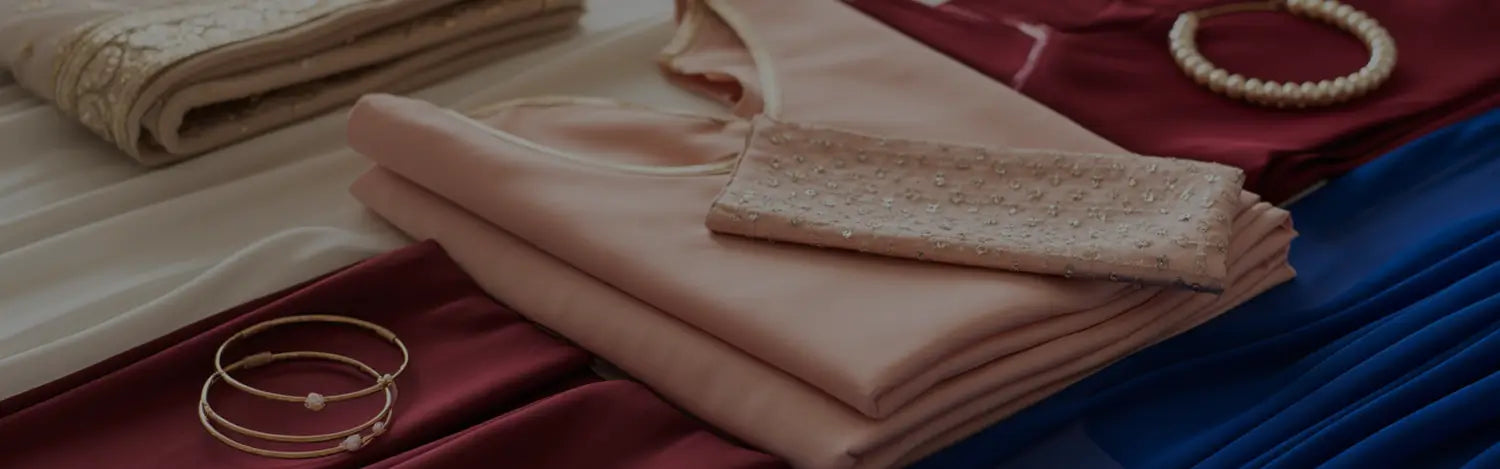

What to Wear to a Summer Wedding in India
You've got a wedding invite for May. The venue is a farmhouse in Rajasthan. The ceremony starts at 11am and the lunch reception spills into the afternoon. Congratulations — you now have the most challenging dressing brief in Indian fashion. A summer wedding outfit in India isn't just about looking good in photographs. It's about surviving four hours in 40-degree heat, staying sweat-free through the pheras, and still looking put-together when someone inevitably pulls out their phone to click a candid of you.
This guide will tell you exactly what to wear, what to skip, and how to make the right calls based on where the wedding is happening and what your body actually feels comfortable in.
Fabric First: This Decision Changes Everything
Most women pick the outfit, then worry about the fabric. That's backwards. Start with fabric and the rest of the decisions become much easier.
The fabrics that genuinely work in Indian summer heat are georgette, mul cotton, chanderi, cotton silk, and chiffon. These aren't just "light" fabrics in theory. They're fabrics that allow air to move between your skin and the cloth, which makes a real difference when you're standing in an open courtyard at noon.
Georgette is probably the most versatile. It drapes beautifully, doesn't wrinkle badly, and feels about 40% lighter than comparable raw silk pieces. Chanderi is a Madhya Pradesh favourite for good reason. The slight sheen gives it a festive quality while the cotton-silk weave keeps it breathable. Mul cotton is what your grandmother reached for every summer, and she was right to.
The fabrics to leave in your wardrobe until October are: heavy raw silk, shantoon lining (as a base layer), velvet, tissue silk with stiff zardozi embroidery, and anything described as "rich fabric" in product listings. Rich usually means heavy. Heavy means hot.
What actually works is pairing a georgette skirt with a cotton lining instead of the standard polyester slip. That single swap makes the outfit feel noticeably cooler against your legs.
The Best Silhouettes for a Summer Wedding Guest
Silhouette matters almost as much as fabric in summer. Fitted, structured garments trap body heat. Flowy, relaxed silhouettes let air circulate.
Anarkali Suits
A floor-length anarkali in georgette or chiffon is one of the most forgiving summer wedding outfit guest choices you can make. The flared skirt sits away from your legs, the fitted yoke looks elegant, and a single-layer dupatta keeps it feeling festive without adding bulk. Petite women look especially good in anarkalis because the vertical line of the outfit creates height without extra layers.
Printed Lehenga Sets
A lightweight lehenga with a good printed design does a lot of work in summer. The print adds visual interest without the weight of heavy embroidery. Block prints, ajrakh prints, and floral digitals in cotton silk or georgette are ideal. The printed lehenga sets at Hansh Couture start at very accessible prices and cover everything from subtle florals to bold Gujarati-inspired motifs.
Sharara and Palazzo Sets
Wide-leg shararas and palazzo sets are underrated for summer weddings. The volume of fabric looks grand in photos but the cut keeps your legs completely free. Pear-shaped bodies particularly benefit from this silhouette because it balances the hip line without adding structure or padding.
Sarees in Light Fabrics
A chiffon or organza saree is genuinely one of the coolest things you can wear to an outdoor summer wedding. Six metres of lightweight fabric drapes beautifully and the sleeveless or half-sleeve blouse option keeps your arms free. The common mistake here is choosing a heavy silk saree because it "looks more wedding appropriate" — a well-draped chiffon saree in a rich colour looks just as formal and won't leave you drenched.
For deeper guidance on outfit choices across different wedding functions, the complete Indian wedding outfit guide covers everything from mehendi to reception in one place.
Colour Strategy for Outdoor Weddings
Outdoor weddings in summer call for a specific colour approach. Dark shades absorb heat. Bright whites can wash out in strong sunlight photography. What you want is the middle ground.
Pastels are your strongest option. Mint green, powder blue, blush pink, lavender, and peach all photograph beautifully in daylight, reflect heat more effectively than dark shades, and look genuinely festive without trying too hard. Most women find that a pale yellow or mango tone also works particularly well at outdoor daytime ceremonies.
If you want to wear something more saturated, terracotta, coral, and turquoise are better choices than navy, maroon, or bottle green in peak summer. They stay vibrant in bright light without absorbing as much heat as darker shades.
One regional note worth making: South Indian weddings often have stricter expectations around colour. A light silk saree in yellow or green is considered auspicious and appropriate. North Indian weddings give you more flexibility with pastels and prints. Bengali weddings traditionally lean into white and red combinations, though guests have broader latitude.
The summer collection at Hansh Couture is built specifically around these seasonal colour palettes — you'll find everything from muted pastels to bright coral across lehengas, suits, and sarees.
What to Avoid: The Honest List
Let's be direct about this because most style guides are too polite to say it plainly.
- Avoid heavy embroidery pieces: Zardozi work and stone embroidery add significant weight and trap heat against your torso. Save those pieces for winter or indoor evening weddings.
- Skip the synthetic dupatta: A polyester dupatta on a humid day is genuinely uncomfortable. Use a chiffon, georgette, or cotton net dupatta instead.
- Don't wear a fitted churidar under a heavy anarkali: The tight ankle-to-thigh fit restricts air circulation completely. Switch to a parallel pant or a flared patiala underneath.
- Avoid multiple layers: Inner slips, heavy lining, thick dupattas doubled over the shoulder — each layer adds heat. Keep the construction as single-layer as possible.
- Skip backless blouses for outdoor ceremonies: They look stunning indoors but direct sun on exposed skin for hours is not a pleasant experience and can cause real discomfort.
The budget breakdown matters too. Under Rs. 2000, your best options are cotton suit sets and simple printed co-ord sets in georgette. Between Rs. 2000 and Rs. 5000, you can find well-constructed printed lehengas and anarkalis in proper georgette or chanderi. Above Rs. 5000, you're looking at hand-block printed pieces, better embroidery work in lightweight fabrics, and more intricate dupattas.
| Budget | Best Option | Fabric to Look For |
|---|---|---|
| Under Rs. 2000 | Cotton suit set or printed co-ord | Mul cotton, cambric |
| Rs. 2000 to Rs. 5000 | Printed lehenga set or anarkali | Georgette, chanderi, cotton silk |
| Above Rs. 5000 | Hand-block print lehenga or organza saree | Organza, tissue georgette, handloom cotton silk |
Quick Styling Tips That Actually Work in the Heat
Getting the outfit right is most of the battle. The styling decisions that follow can either protect that effort or undo it.
- Keep your dupatta to a single drape over one shoulder rather than wrapped around both. It looks just as elegant and adds half the heat.
- Swap statement necklaces for statement earrings in summer. Heavy necklaces sit against your neck and chest where you're already warm. Big jhumkas or chandbalis add the same visual impact with no heat cost.
- Wear open-toe footwear or juttis with ventilation. Closed heels in summer are a recipe for discomfort by hour two.
- If you're travelling to the venue in your outfit, carry a small clutch with a mini deodorant, a folded tissue dupatta, and a compact mirror. These three things will save you at every summer wedding.
- For apple-shaped bodies, a flowing anarkali with a V-neck kurta cut draws the eye upward and skims the midsection without clinging. For hourglass figures, a fitted choli with a flared lehenga skirt in lightweight fabric shows the shape without overheating the waist area.
Hansh Couture ships pan-India for free, offers full-stitched options from size 34 to 44, and has pieces starting at Rs. 999. You don't need a massive budget to dress well for a summer wedding. You need the right fabric in the right silhouette. Browse the full summer collection to see what's available across all price points — the range covers everything from simple daytime suits to more elaborate printed lehengas for evening functions.
A summer wedding in India doesn't have to mean choosing between comfort and looking good. Pick the right fabric, stay with lighter colours for outdoor ceremonies, skip the heavy embroidery and synthetic layers, and you'll look exactly as put-together in the last photograph as you did in the first.