
What to Wear as a Bridesmaid at an Indian Wedding
Being a bridesmaid at an Indian wedding is genuinely one of the most fun roles you can have. It's also the one where most women make their outfit decisions in a hurry, end up in something uncomfortable, or arrive wearing a colour that clashes with half the wedding party. You're not there to blend into the walls, but you're also not there to steal focus from the bride. That balance is exactly what this guide will help you get right.
Coordinate Without Matching: The Approach That Actually Works
The biggest mistake most bridesmaid groups make is trying to wear identical outfits. It looks great in theory and almost always looks stiff in photos. What works far better is coordinating through a shared colour family or a common fabric, while letting each person choose the silhouette that actually suits her body.
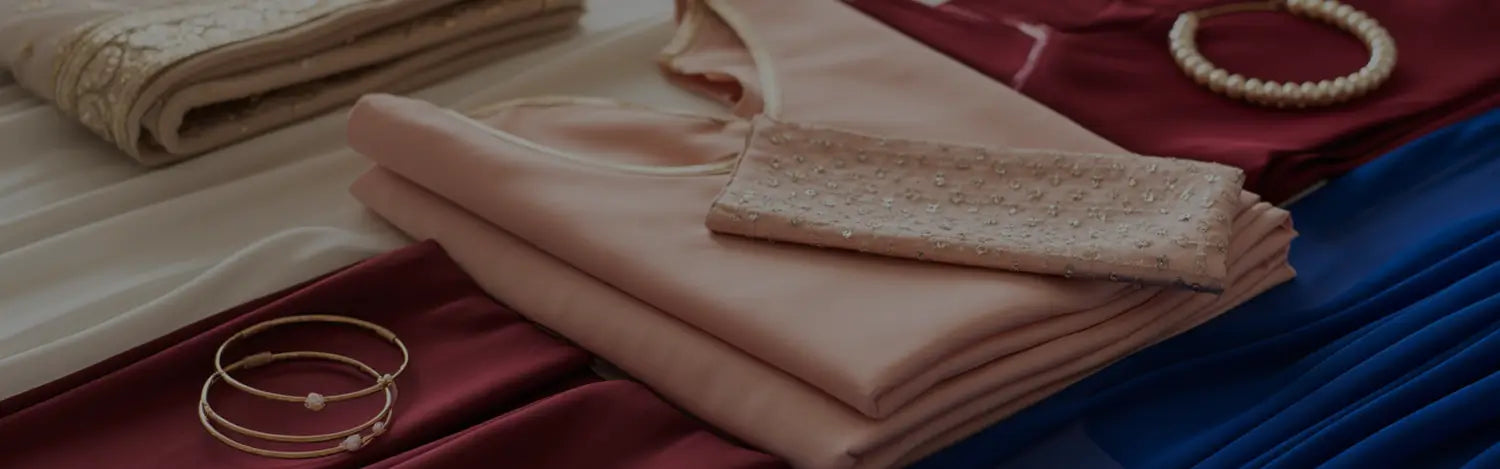
Here's a practical example. If the bride wants her bridesmaids in dusty rose, one person can wear a sharara set in that shade, another an anarkali, and a third a lehenga. Same colour story. Completely different silhouettes. The result looks intentional and visually interesting rather than like a uniform.
The common mistake here is over-coordinating the embroidery style too. Keep embellishment levels in the same range, heavy or light, but don't stress about matching zardozi to zardozi or mirror work to mirror work exactly.
- Pick one colour as the anchor, allow 2 shades on either side of it
- Agree on fabric weight: all light georgette or all heavier silk, not a mix
- Let jewellery vary, but keep the metal tone consistent: all gold or all silver
If you want a broader view of how this fits into planning a full wedding wardrobe, this Indian wedding outfit guide covers every role from bride to guest across ceremony types.
The Best Outfit Types for a Bridesmaid in India
Not every outfit type suits every ceremony, body type or comfort level. Here's a practical breakdown of what works and where.
Sharara Sets
A sharara set is one of the most underrated bridesmaid choices in India. The flared palazzo-style legs are forgiving on most body types, the kurta top covers the midsection comfortably, and the dupatta gives you styling flexibility without being as high-maintenance as a full saree. For petite frames, keep the kurta length to the knee rather than floor-length to avoid losing height.
Anarkalis
An anarkali dress is a reliable bridesmaid choice for a reason. The flared silhouette works well on pear-shaped and apple-shaped bodies because it skims the hips and creates a defined waist. Floor-length anarkalis with churidar bottoms photograph beautifully at pheras. For sangeet or mehendi, a knee-length anarkali with palazzo pants is easier to move in.
Co-ord Sets
Silk or brocade co-ord sets have become a real option for Indian weddings over the last few years. They work especially well for mehendi and sangeet ceremonies where the dress code tends to be more relaxed. Most women find that a co-ord set with a straight-cut kurta and cigarette pants is about 40% easier to manage across a long day compared to a lehenga, simply because there's no heavy skirt to carry.
Colour Coordination: A Practical Guide by Ceremony
Indian weddings rarely have just one event. You're typically dressing for 3 to 5 ceremonies, and your colour choices should shift slightly across them.
| Ceremony | Recommended Colours | Colours to Skip |
|---|---|---|
| Mehendi | Yellow, orange, lime green, peach | Black, dark navy, grey |
| Sangeet | Lilac, turquoise, coral, hot pink | Bridal red, ivory, cream |
| Haldi | Yellow, white, pale mint | Any outfit you love, haldi stains permanently |
| Wedding / Pheras | Dusty rose, sage, deep teal, gold beige | Bridal red, heavy bridal pink, all-white |
| Reception | Jewel tones: emerald, sapphire, deep plum | Anything heavier than the bride's reception look |
Regional traditions matter here. South Indian weddings, especially Tamil and Telugu ceremonies, traditionally favour bright silk in colours like peacock blue, parrot green and deep magenta. Bengali weddings have a strong preference for red and white combinations. North Indian Punjabi weddings tend to be more flexible with colour choices, though heavy embellishment is always appreciated.
Staying Comfortable Through a 6 to 8 Hour Wedding Day
This is the part nobody talks about enough. A bridesmaid's job involves standing, sitting on the floor, running errands, doing garba or Bollywood numbers at sangeet, and possibly helping the bride change her dupatta draping 4 times. Comfort is not optional.
What actually works is choosing a fully stitched outfit rather than one that needs pinning and readjusting. Fully stitched shararas and anarkalis in sizes 34 to 44 are available ready to wear and save you the panic of last-minute alterations.
- Choose georgette or crepe over heavy raw silk if you'll be dancing: these fabrics are significantly lighter and breathe better
- Wear block heels or kitten heels rather than stilettos: most wedding venues have uneven surfaces, especially outdoor mandaps
- Pre-stitch your dupatta the night before using a few safety pins inside the seam: you won't be re-draping it at 11 PM
- If your outfit has a lot of zardozi work on the border, wear a fitted blouse underneath to prevent irritation during long ceremonies
- Chikankari embroidery on cotton or georgette is a genuinely smart choice for day ceremonies in summer months: it's light, it's elegant, and it doesn't trap heat
Budget-wise, you don't need to overspend. Under Rs.2000 gets you a solid georgette sharara or anarkali suitable for mehendi and sangeet. The Rs.2000 to Rs.5000 range covers embroidered options in silk blends that work for the main wedding day. Above Rs.5000 makes sense only if this is a style you'll genuinely wear to 3 or 4 more events in the next year.
Quick Styling Fixes That Make a Real Difference
The outfit is only part of the picture. Three small decisions can change how the whole look reads in photos.
First, match your dupatta draping style to the silhouette. With a sharara, one side pinned at the shoulder and the other end left loose works cleanly. With an anarkali, draping the dupatta across both forearms keeps it out of the way while looking intentional.
Second, keep your bag small. A potli bag or a minaudière clips neatly to your wrist and doesn't interrupt the line of the outfit in photographs. Most women find that carrying a large tote, even a beautiful one, pulls the whole look down.
Third, think about your jewellery weight relative to the neckline. A high-neck anarkali needs nothing more than jhumkas and a maangtika. A lower V-neck calls for a layered necklace. Getting this wrong is one of the easiest ways to make an otherwise great outfit look unfinished.