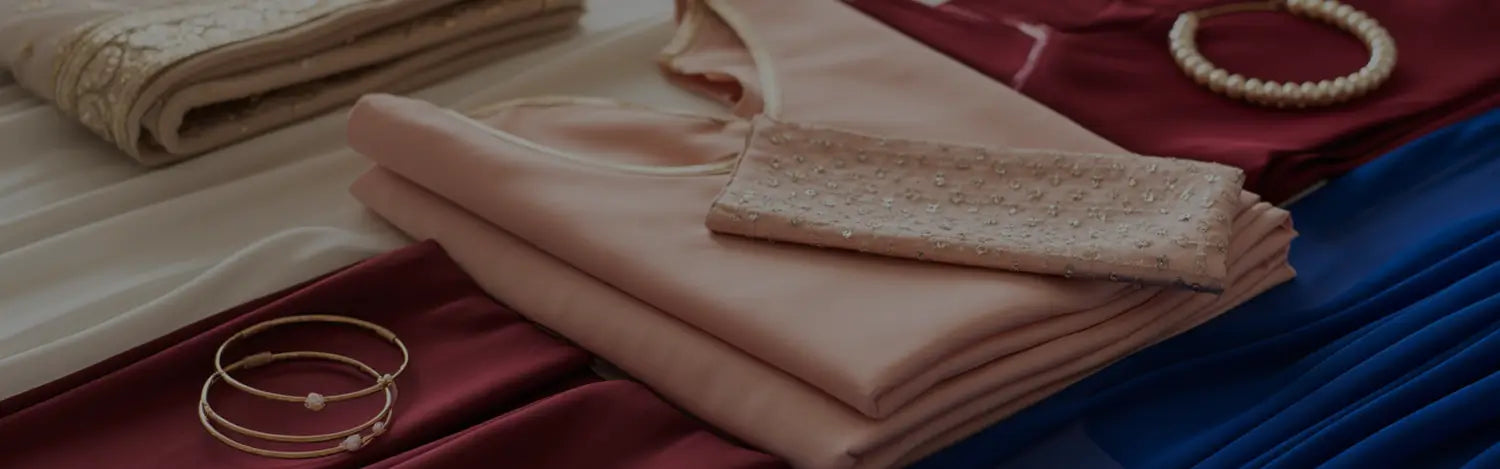

Crop Top Lehenga: The Trend That is Not Going Away
There was a time when showing any midriff at an Indian wedding felt like a bold move. That time has passed. The crop top lehenga trend has quietly become the most versatile silhouette in ethnic fashion, and if you've attended more than three weddings in the last five years, you already know this. What started as a Bollywood experiment has become the default choice for bridesmaids, wedding guests, and even brides who want something distinct from the traditional full-sleeved choli.
The real question isn't whether this style is fashionable. It clearly is. The question is how to wear it so it actually works for your body, your event, and your personal comfort level.
Why This Silhouette Caught On and Stayed
The traditional lehenga choli was never designed for Indian summer weddings. A full-coverage blouse with heavy embroidery, worn under direct sunlight for 6 hours, is genuinely uncomfortable. The cropped blouse solved that. Less fabric at the torso means better ventilation, and that practical benefit quietly pushed this style into the mainstream.
The second reason is fit. A crop top gives a tailor or brand a smaller surface area to work with, which means embroidery placement, neckline detailing, and sleeve design all read more clearly. You'll notice that zardozi work on a crop top blouse looks far more intentional than the same work spread across a longer choli.
Third, the silhouette photographs beautifully. The defined waistline and the visual break between blouse and skirt creates proportion in photos that a longer choli sometimes flattens. Most women who've worn both styles agree that the crop version does more for your shape on camera, even if the difference feels subtle in person.
If you want a deeper breakdown of how lehenga silhouettes have evolved and what to look for before buying, the Hansh Couture lehenga buying guide covers the full picture.
Body Type Guide: Who Wears What
The common mistake here is assuming this style only works for one body type. It doesn't. What changes is the length of the crop and the waistband height of the skirt.
Petite frames (under 5'2")
Go for a crop top that ends 1.5 to 2 inches above the skirt waistband. Too much midriff exposure on a shorter frame can visually shorten your torso. A high-waisted lehenga skirt that sits at or above the navel is your best friend here.
Pear-shaped figures
Your upper body is narrower, so a crop top with embellished sleeves or a statement neckline adds visual width where you want it. Keep the lehenga skirt in a darker shade if you prefer, but an A-line flare will balance your silhouette beautifully regardless of colour.
Apple-shaped figures
This is where a high-waisted skirt does real work. Worn correctly, it cinches at the smallest part of your frame and lets the crop top sit just above that line. The dupatta draped across the front adds softness and reduces how much midriff is actually visible. What actually works is choosing a structured crop top with some boning or inner lining rather than a soft, unstructured one.
Hourglass figures
You have the most flexibility here. A 3 to 4 inch midriff gap looks proportionate, and both heavily embroidered and minimalist crop top styles work equally well.
Occasion Guide: What Works Where
| Occasion | Recommended Style | Dupatta Tip |
|---|---|---|
| Mehendi | Lightweight fabric, mirror work or gota patti, bright colours | Carry but don't drape, you need your hands free |
| Sangeet | Sequin or shimmer fabric, bold colour, shorter skirt acceptable | One-shoulder drape or skip it entirely |
| Wedding ceremony | Heavier embroidery, longer crop top, richer fabrics like raw silk or velvet | Full dupatta drape for more traditional settings |
| Reception or cocktail | Indo western lehenga with structured crop top, western-inspired necklines | Optional, a statement belt works instead |
| Festive or puja at home | Cotton or chanderi, chikankari embroidery, subtle colours | Draped modestly across the front |
How to Style It: The Details That Actually Matter
Most women get the outfit right and then lose the look in the accessories. Here's where to focus your attention.
- Jewellery proportion: A heavily embroidered crop top needs minimal jewellery. Studs and a single stack of bangles is enough. A plain or lightly embroidered top is your cue to bring out the kundan necklace or the jhumkas.
- The blouse back: This gets overlooked almost every time. Since you'll be showing your midriff, the back design matters just as much as the front. Deep U-backs, dori closures, and back embroidery are all worth considering.
- Footwear height: If your lehenga skirt is full-length, add at least a 2-inch heel to avoid the skirt dragging. Kolhapuris work beautifully for daytime functions, block heels for evening events.
- Hair and the neckline: A halter neck crop top reads better with hair pulled back or up. A sweetheart or square neckline can handle loose waves. These are small decisions that change how the whole look lands.
Budget Guide: Where to Invest and Where to Save
You don't need to spend a fortune to wear this style well.
- Under Rs.2000: Look for georgette or net fabric lehenga sets with printed or light embroidered work. Perfect for mehendi or daytime functions. Hansh Couture's lehenga collection starts at Rs.999 with free pan-India shipping.
- Rs.2000 to Rs.5000: This is where you start finding heavy thread work, mirror embellishments, and better fabric quality. A crop top lehenga set in this range worn to a sangeet will consistently look expensive.
- Above Rs.5000: Raw silk, velvet, or heavily zardozi-worked pieces with full stitching included. These are the pieces worth wearing to the main wedding ceremony. The designer lehenga sets at Hansh Couture are fully stitched in sizes 34 to 44, so no tailor visit required.
The common mistake women make with budget dressing is spending on the wrong piece. A Rs.3000 skirt with a Rs.800 blouse will always look mismatched. Buy the set together or match fabrics very carefully if you're mixing pieces.
A Note on Fabric and Season
This is where most buying decisions go wrong. A velvet crop top lehenga is gorgeous in December at a Delhi wedding. Wear that same outfit to a Surat or Mumbai wedding in March and you'll spend the entire function looking for air conditioning.
Georgette and chiffon are your summer fabrics. Both drape well, both photograph with movement, and both breathe. Raw silk and chanderi work through most of the year in moderate climates. Velvet and brocade belong strictly to winter weddings. Most women find that georgette lehenga sets give the most consistent results across seasons and occasions, which is why they dominate the crop top lehenga trend regardless of what else is happening in fashion that season.
The modern lehenga style is not going back to full coverage blouses anytime soon. If you've been curious but haven't made the move yet, start with a set that has a longer crop top length, perhaps just 2 inches of midriff showing, and a high-waisted skirt. Once you see how the silhouette works on you, you'll understand why this hasn't left the shelves in half a decade.