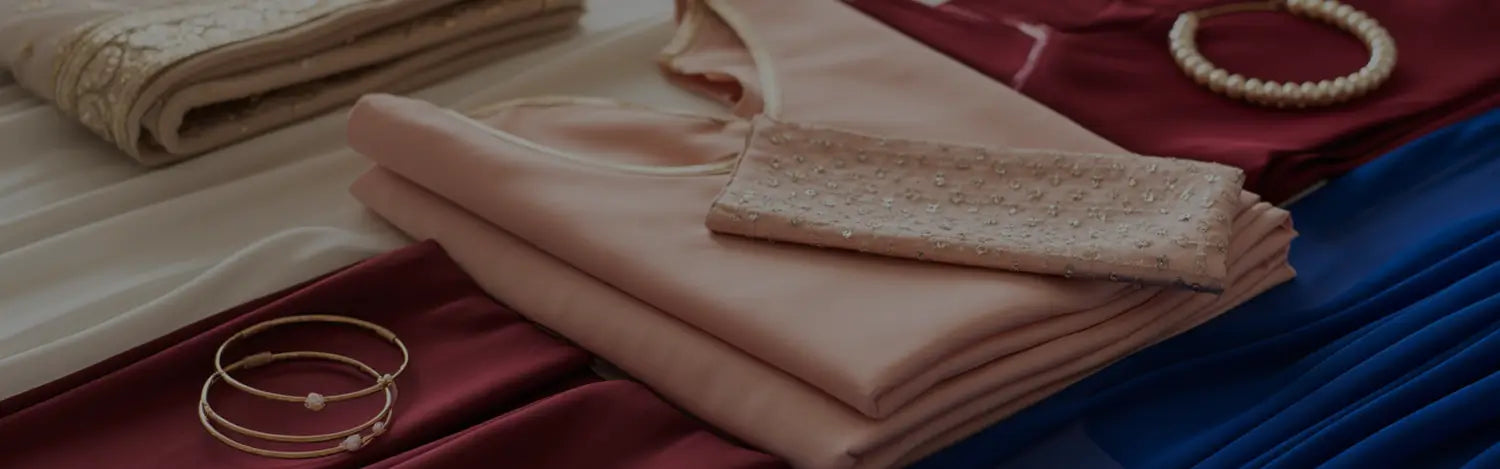

Heavy Work Gown: Complete Styling Guide
A heavy work gown is a serious outfit. It asks for attention, commands presence, and can genuinely make you look like the best-dressed woman at the celebration. But here's the thing most women don't realise until they're standing in front of the mirror at 7 PM: it also demands restraint in everything else you put on. Get that balance wrong and you don't look overdressed, you look confused. This guide will help you get it right, from the moment you choose your jewellery to the second you step into your footwear.
Understanding What "Heavy Work" Actually Means
Not all embroidered gowns are created equal. Heavy work refers to dense surface embellishment, think zardozi, cutdana, sequin layering, mirror work, or a combination of all four covering a significant portion of the fabric. This is different from a light chikankari embroidery or a simple printed gown.
The weight matters literally. A heavily embroidered gown in raw silk or georgette can weigh between 800 grams to 1.5 kilograms. That affects how it falls, how you move, and how long you can comfortably wear it. Most women find that the embroidery placement, whether it's concentrated on the bodice, hemline, or spread all over, is the single biggest factor in how you style everything else.
Browse Hansh Couture's heavy work gown collection to see the range of embroidery styles available, from scattered mirror work to full-coverage zardozi panels.
Jewellery: The One Focal Point Rule
This is where most women go wrong. A heavy embroidery gown already has its own visual weight. Adding a full bridal jewellery set on top of it creates noise, not elegance.
When the Gown Has a Heavy Neckline
Skip the necklace entirely. A heavily worked neckline and a statement necklace compete for the same space, and neither wins. Choose long chandelier earrings instead, something with polki, kundan, or pearl drops that adds length to your face. A single gold or diamond bracelet on one wrist is more than enough.
When the Embroidery Is Concentrated on the Hem
Your upper body is relatively calm, so this is your moment to wear that choker or layered necklace you've been saving. Keep earrings small, studs or small jhumkas work perfectly. The common mistake here is adding both a statement necklace AND heavy earrings because the bodice looks "plain." It isn't plain. It's intentionally clean.
Body Type Tip
If you have a petite frame, avoid chunky layered necklaces with a full gown silhouette. They cut your height visually. Long pendant earrings elongate the neck and work much better on a petite body under 5'3".
Footwear That Won't Ruin the Look
Floor-length gowns hide your feet 90% of the time. That doesn't mean footwear doesn't matter. The right heel height changes your entire posture, which changes how the gown falls.
- Block heels (2 to 3 inches): The most practical choice for a 4 to 6 hour function. Stable, comfortable, and give you the height needed for a floor-length gown to fall correctly without you tripping.
- Stilettos (3 inches and above): Stunning for reception or sangeet photos, genuinely difficult to wear all evening on lawns or banquet hall carpets.
- Embroidered juttis: Works beautifully if the gown has a slight flare and your natural height is above 5'5". Below that height, juttis with a floor-length gown tend to drag the hemline.
- Platform heels: A solid option for plus-size women who want height and stability without the ankle pressure of a stiletto.
What actually works for most women is a block heel or kitten heel in a metallic tone, gold, silver, or rose gold, that complements the gown's embroidery thread colour rather than matching the fabric exactly.
Hair Styling for a Heavy Work Gown
Your hair competes with your gown or complements it. There's rarely a middle ground.
For All-Over Heavily Embroidered Gowns
Pull your hair up. A low bun, a sleek updo, or a French twist clears your neck and shoulders, letting the embroidery speak without interference. Adding mogra flowers or a single gold hair pin to the bun keeps it occasion-appropriate without adding more visual clutter.
For Gowns with Heavy Hemlines and Lighter Bodices
Soft loose waves or a half-up, half-down style works well here. The hair adds softness to the upper body while the statement hemline does its own work below. Avoid tight high ponytails with this style because they create a harsh contrast against the gown's femininity.
Regional Consideration
South Indian women often pair gowns with jasmine-lined braids for half-saree ceremonies or puberty functions. North Indian brides and guests tend to prefer updos with maang tikkas. Bengali styling often incorporates a low bun with a side parting and minimal hair accessories. All three approaches work, but match your hair accessory metal tone to your jewellery metal for visual consistency.
Dupatta Styling: Use It or Skip It Deliberately
Gown with dupatta styling is beautiful when it's intentional and chaotic when it's an afterthought.
The rule is simple. If your gown's embroidery covers the full body, skip the dupatta. The outfit is complete. A dupatta layered over a fully worked gown just adds fabric weight and visual confusion. If the gown's embroidery is focused on the hem or bodice only, a sheer dupatta in a toning or contrasting colour draped over one shoulder adds elegance.
- Single shoulder drape: The easiest and most modern option. Tuck one end lightly into the waist or let it fall freely.
- Front drape with both ends pinned: More traditional, works well for mehendi or haldi functions where a covered look is expected.
- Dupatta as a veil: Used for religious ceremonies or nikah settings. A heavily embroidered border dupatta pinned at the crown of the head works with a simpler gown underneath.
Which Occasions Are Right for a Heavy Work Gown
Not every event calls for this level of dressing. Wearing a fully embroidered gown to a simple engagement lunch is like wearing a lehenga to a haldi, technically fine, but slightly off.
| Occasion | Recommended Embroidery Level | Best Gown Silhouette |
|---|---|---|
| Wedding Reception | Full coverage zardozi or sequin work | Floor-length flared gown |
| Sangeet | Mirror work or resham embroidery | Anarkali cut for ease of movement |
| Cocktail / Pre-wedding Party | Sequin or cutdana on bodice only | Fitted or mermaid gown |
| Festive Puja or Navratri | Light to medium threadwork | Anarkali gown with comfortable fit |
| Engagement Ceremony | Medium embroidery, pastel tones | A-line gown |
If you prefer the anarkali silhouette specifically for its flared comfort and movement, Hansh Couture's anarkali gown collection has options across embroidery levels and occasions, with full-stitched sizing from 34 to 44.
Quick Styling Summary by Body Type
- Pear shape: Choose gowns with heavier embroidery on the bodice to draw attention upward. A-line flare below the waist balances proportions without emphasising the hips.
- Apple shape: Empire waist gowns with embroidery starting just below the bust are the most flattering. Avoid heavy waistband embroidery that draws attention to the midsection.
- Hourglass: Almost any silhouette works. A fitted gown with full embroidery coverage is stunning on this body type. Use a belt or embroidered waistband to define the waist further.
- Petite (under 5'2"): Vertical embroidery patterns elongate the body. Avoid very wide border hemlines that cut the body horizontally at the ankle level.
Heavy work gown styling is ultimately about confidence and balance. The gown is already doing the heavy lifting, literally and figuratively. Your job is to let it shine without overloading yourself with accessories, hair, and layers that compete with the embroidery rather than complete the look. Get one thing right: choose your focal point, build everything else quietly around it, and you'll walk into any celebration knowing you've genuinely nailed it.