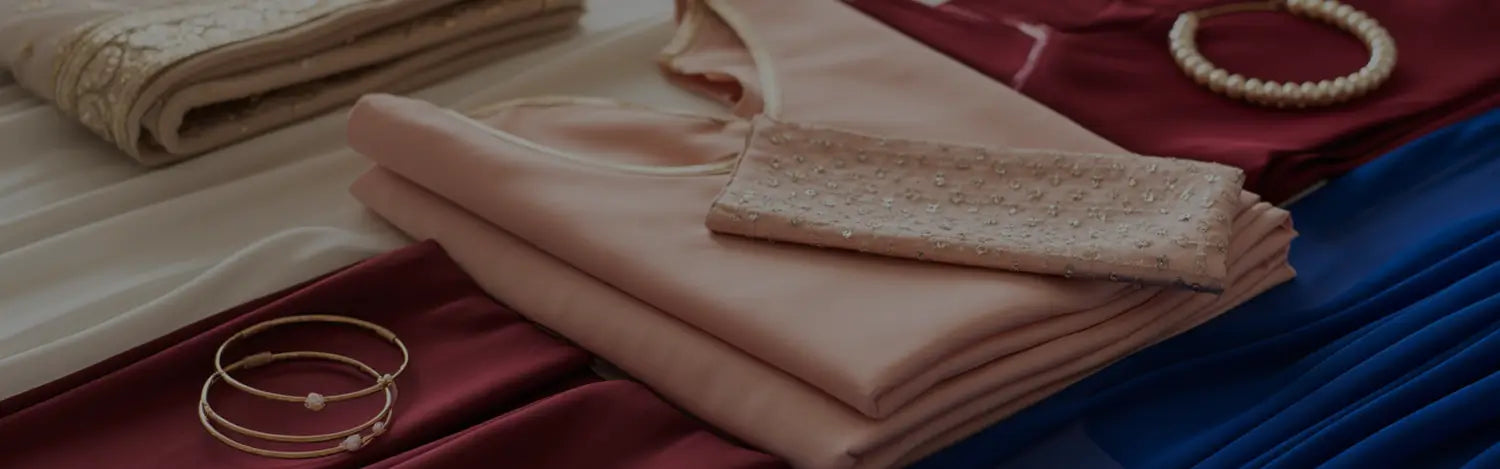

Sharara for Karwa Chauth: Modern Alternative to Saree
Let's be honest. The pressure to wear a saree on Karwa Chauth is real. Your mother-in-law wore one. Your neighbour looks impeccable in one. But if you've spent a Karwa Chauth evening wrestling with a pleated saree while fasting, trying to keep the pallu in place during the chand dekhai, you already know there's a better way. A sharara for Karwa Chauth gives you every bit of the festive grandeur without the struggle, and right now it's one of the most beautiful silhouettes in Indian ethnic wear.
Why the Sharara Makes Complete Sense for Karwa Chauth
The sharara is not new. It's a silhouette rooted in Mughal court fashion, which means its festive credentials are impeccable. What's changed is the fabric, the embroidery styles, and the way modern Indian women are styling it for occasions that once felt strictly saree-only.
There are 3 practical reasons women are making this switch. First, the flared pants sit away from your body entirely, which is genuinely comfortable during a day of fasting. No waistband pressing into you by evening. Second, the dupatta draping for a sharara set is far more manageable than six yards of silk. Third, you get a full, structured festive look in under 15 minutes of getting dressed.
Most women find that once they try a sharara for a high-stakes occasion, they stop overthinking the saree decision entirely. It's not about abandoning tradition. It's about choosing a tradition that actually fits your life.
For a deeper look at how to approach your festive wardrobe this season, the Indian festive wear guide covers everything from fabric choices to occasion-specific dressing across different festivals.
Choosing the Right Sharara: Fabric, Silhouette, and Embroidery
Fabric First
Not all shararas are built for Karwa Chauth. This is an evening occasion, often outdoors, sometimes chilly depending on your city and the time of year. You need a fabric with weight and a bit of structure.
- Georgette with embroidery: The most popular choice. Drapes beautifully, catches the light, and doesn't feel heavy on a fasting body.
- Raw silk or art silk: Gives a more opulent look and holds its shape through hours of wear. Great if you're going for a richer effect.
- Velvet sharara: Perfect for late October or November Karwa Chauth when the weather cools. Looks intensely festive and photographs beautifully.
- Chanderi with block print: A lighter, more understated option if you prefer minimal embellishment.
The common mistake here is buying a sharara in a very lightweight fabric like chiffon without lining. It looks sheer in outdoor lighting and can feel insubstantial for a festive occasion that calls for some presence.
Silhouette by Body Type
The sharara is genuinely one of the more forgiving silhouettes in Indian fashion, but small adjustments make a real difference.
| Body Type | What Works Best | What to Avoid |
|---|---|---|
| Petite (under 5'2") | Mid-thigh length kurti, moderate flare | Very wide palazzo-style flares |
| Pear Shape | Embellished kurti top, plain flared sharara | Heavy embroidery concentrated at hips |
| Apple Shape | Longer A-line kurti, vertical embroidery | Short crop-style kurtis |
| Hourglass | Any kurti length, defined waist works beautifully | Oversized boxy kurtis that hide the shape |
Colour and Embroidery: Getting the Karwa Chauth Mood Right
Red is the classic answer and it works every single time. But the conversation around Karwa Chauth colours has opened up considerably. Deep maroon with zardozi work, burnt orange with thread embroidery, wine with sequin detailing — all of these read as festive and bridal-adjacent without being costume-like.
What actually works is choosing a colour in the warm spectrum and letting the embroidery do the storytelling. A plain red sharara looks occasion-appropriate. A red sharara with gota patti border on the kurti and dupatta looks intentional and elevated.
Avoid very light pastels for this occasion. Ivory, blush, and mint are lovely fabrics but they read as daytime casual rather than festive evening. Karwa Chauth is an evening ritual with candles and moonlight, and your outfit should match that energy.
3 Ways to Style Your Karwa Chauth Sharara
1. Classic Festive: Full Jewellery, Head-Covered Dupatta
Drape your dupatta over your head for the pooja. Use a saree pin at the shoulder to keep it secure. Pair with a full choker or kundan necklace, chandbali earrings, glass bangles in matching red or gold, and a maang tikka. This styling reads as completely traditional and will satisfy every aunty in the room.
2. Modern Festive: Open Dupatta, Statement Earrings
Let the dupatta fall loose over one shoulder, held in place with a decorative pin. Skip the necklace entirely and let a pair of oversized jhumkas or polki earrings be the focal point. Add a sleek hairbun with a floral gajra and you have a look that's contemporary but still deeply rooted in the occasion.
3. Minimal Luxe: Embellished Sharara, Simple Accessories
If your sharara has heavy embroidery, let it breathe. Keep jewellery to small gold studs, a thin kada, and a delicate maang tikka. This works particularly well with velvet shararas or those with extensive zardozi work where adding more jewellery tips the look into overdressed territory.
Browse the full range of sharara sets at Hansh Couture, available in sizes 34 to 44 with fully stitched options and free pan-India shipping. Prices start at Rs.999, so you can find something beautiful across every budget.
Budget Guide: What to Expect at Each Price Point
| Budget | What You Get | Best For |
|---|---|---|
| Under Rs.2,000 | Georgette with printed or light embroidered work, good colour range | First-time sharara buyers, casual family celebrations |
| Rs.2,000 to Rs.5,000 | Heavier fabrics, thread embroidery, sequin detailing, better fall and drape | Karwa Chauth with extended family, photographed celebrations |
| Above Rs.5,000 | Zardozi or gota patti work, velvet or raw silk fabric, heirloom-level finishing | Women who want one outfit that works for Karwa Chauth and wedding functions |
If you're looking for something that crosses over between Karwa Chauth and the wedding season that follows, the wedding sharara collection has heavily embellished pieces that justify wearing them across 2 or 3 occasions.
One Last Thing Before You Decide
The karwa chauth sharara isn't a compromise. It's a fully considered choice that respects the occasion's traditions while giving you something the saree genuinely can't: ease. You'll stand comfortably for the pooja. You'll move freely during the chand dekhai. Your dupatta will stay where you put it.
That's not a small thing on a day when you're already fasting from sunrise. Dress beautifully, yes. But dress in something that lets you actually be present for the ritual rather than managing your outfit through it.
Explore the full collection and find your perfect fit at Hansh Couture's sharara sets, with fully stitched options ready to wear straight out of the package.