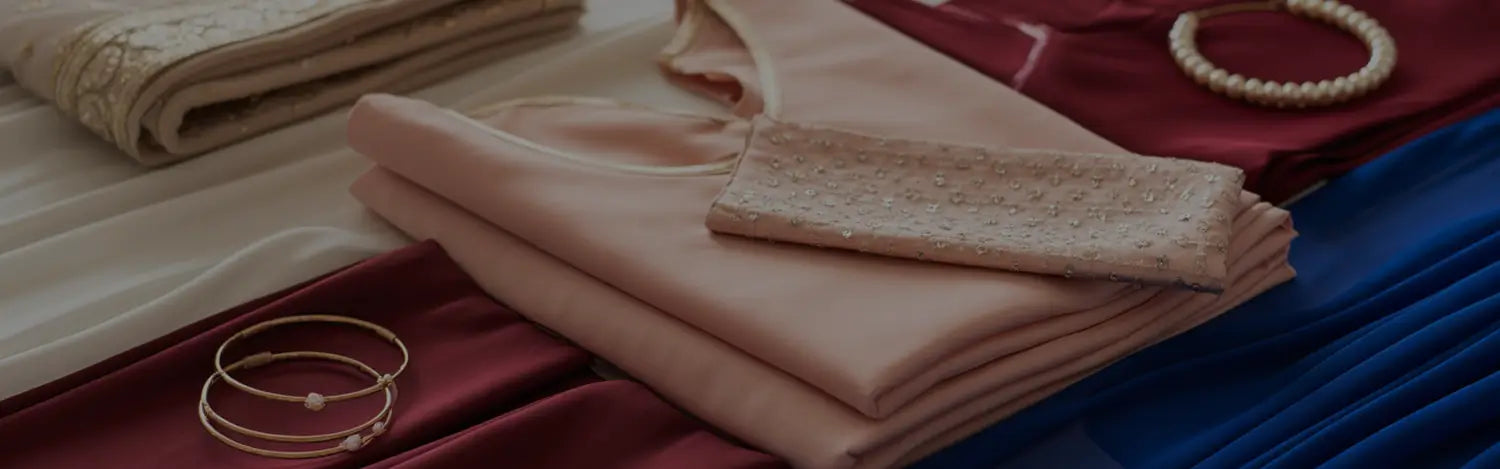

First Karwa Chauth: Rewear Your Wedding Outfit or Choose Something Different?
Your first Karwa Chauth outfit can come from your wedding wardrobe. You might enjoy wearing the complete bridal look again, prefer just its dupatta or blouse, or feel more like yourself in a different outfit. Start with what fits your plans and feels manageable, rather than assuming the occasion requires a new purchase.
Karwa Chauth falls on Thursday, 29 October 2026, according to Drik Panchang's 2026 calendar for New Delhi. Check your own city's calendar for local timings. Clothing preferences and customs vary between families; this guide helps with the outfit decision, not ritual instructions.
Choose one of three routes
- Wear the full wedding outfit if you want that complete look and each piece still fits well.
- Reuse one bridal piece if the memory matters more than recreating the whole ensemble. A dupatta, blouse or skirt can be the starting point.
- Choose a different outfit if the bridal set needs work, does not suit your day, or simply is not what you want to wear. An outfit you already own is a valid starting point.
Before deciding, think through where you will be: at home, visiting family, travelling between houses, or changing for an evening gathering. Also ask about any family preferences early, so you can make a choice without last-minute pressure.
Try the complete bridal outfit before committing
Take the pieces out of storage while there is still time to inspect them. Check the care labels, seams, closures, lining and embellishments. If anything needs cleaning or repair, ask a suitable professional what is feasible; do not try an unfamiliar cleaning method on a sentimental garment just to save time.
Wear the blouse, skirt, intended inner layers and footwear together. A blouse that closes while standing can feel different when you sit or reach forward. Check the waist fastening, arm movement, neckline coverage and the places where embroidery touches your skin. Walk a short distance indoors, turn, sit and stand again. Notice whether the hem catches under your shoes or whether the dupatta keeps slipping.
Use the piece-by-piece ethnic-wear fit checklist if you need help identifying measurements to check. A label or an old measurement is not a substitute for trying the outfit as you plan to wear it now.
Keep one sentimental piece without remaking everything
If the full ensemble feels like more than you want for the day, lay out the bridal pieces separately alongside clothes you already own.
- The dupatta: try it with a familiar suit or plain separates. Check that its border does not drag and that your chosen way of securing it does not damage either garment.
- The blouse: try it with an existing saree or skirt. Check coverage and the way the colours and embellishments look together in ordinary light.
- The skirt: pair it with a blouse you know fits, then assess the complete length and waist arrangement rather than assuming different pieces will automatically work together.
Take a photograph of a pairing you like so you can recreate it without repeating the decision on the day. You can use fewer accessories if that suits you. There is no need to copy every part of the wedding styling for the outfit to feel meaningful.
If something no longer fits, keep the options open
Ask a tailor to inspect the garment before agreeing to alterations. Whether a blouse can be let out, a closure changed or a hem adjusted depends on its construction and available fabric. Discuss what the change will look like, whether it is reversible, and when a fitting can happen. Do not assume extra seam allowance is present.
If a change cannot be completed comfortably in time, use another blouse or choose an already wearable outfit. Keep a backup ready rather than making an unfinished alteration your only plan. Our guide to stitched, semi-stitched and unstitched lehengas explains why each component needs its own preparation check when you are considering a replacement.
If you decide to choose a different outfit
First look at the suits, sarees and separates already in your wardrobe. For broader styling options, see our Karwa Chauth red and maroon outfit guide. Those colours are options, not a rule for every family.
If you are genuinely looking to buy, the Embroidered Organza Sharara Set with Dupatta is one three-piece example: its product listing describes a stitched, micro-lined top, sharara and organza dupatta. Check the selected variant, measurements and hem before ordering. A stitched garment can still need fit adjustments, and availability differs by size.
Keep the delivery estimate separate from the date of the celebration. Confirm current availability and allow for any preparation; an estimated arrival is not a guarantee that an outfit will be ready for your plans. The product below is an optional alternative, not a reason to replace a wedding outfit you already want to wear.
Make the final decision with the full outfit ready
Set out the outfit, inner layers, footwear, accessories and chosen dupatta together. Keep closures and any securing method easy to manage, and keep loose fabric clear of lit diyas. Choose the route that works after a real try-on: the complete bridal set, one piece with a new pairing, or a different familiar look. Rewearing can be the point of the outfit, not a compromise.