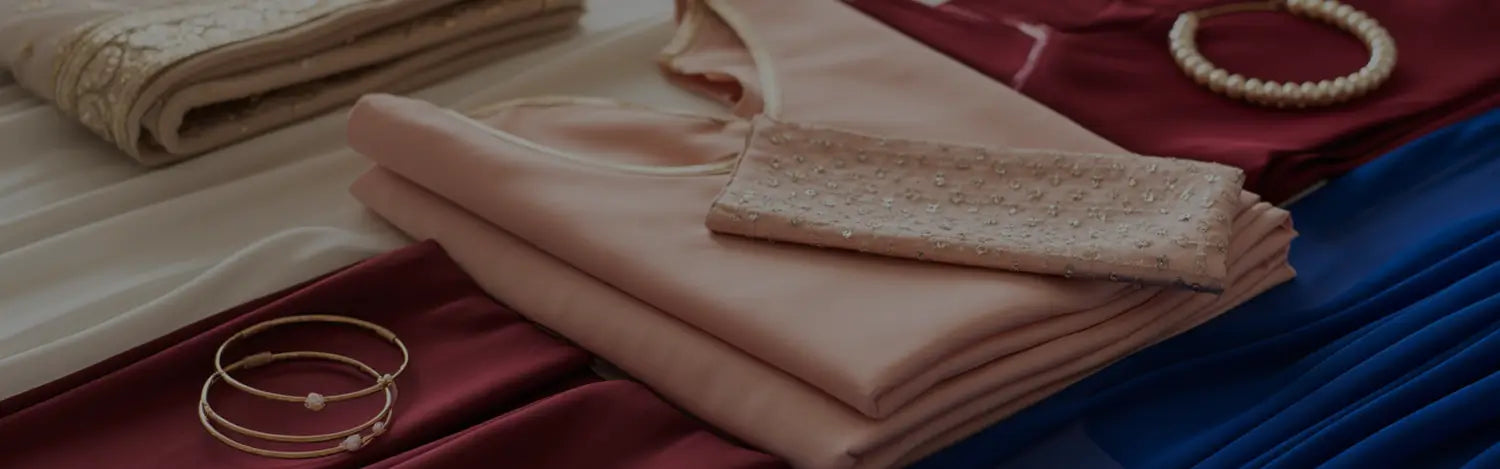

Diwali Family Function Outfit: Balancing Tradition and Style
Every year, without fail, the panic sets in about 10 days before Diwali. You open your wardrobe, stare at last year's outfit, and wonder if you can repeat it without anyone noticing. Then you start browsing online and get completely overwhelmed by lehengas that look more nightclub than family puja. Dressing for a Diwali family function has its own unspoken rulebook — and most of us are just guessing.
The good news is that once you understand what actually works in a family setting, picking the right Diwali family outfit becomes genuinely easy. It's not about being boring. It's about choosing looks that feel festive, suit your body, and don't make your mother-in-law raise an eyebrow during the lakshmi puja.
Why Family Functions Need a Different Approach Than Weddings or Parties
A Diwali celebration at home involves three generations in the same room. Your naani, your college-going niece, and everyone in between. The dress code is rarely stated, but it's always implied.
The common mistake here is treating a family Diwali like a Diwali party. Deep necklines, very short kurtas with tight churidars, or heavily embellished outfits that feel more reception-ready than puja-appropriate — all of these create an awkward mismatch with the occasion's tone. What actually works is festive-but-grounded: rich fabrics, elegant silhouettes, and moderate embellishment that says celebration, not performance.
For a fuller picture of how to approach ethnic dressing across different festive occasions, the Indian festive wear guide covers the broader context really well.
The Best Silhouettes for a Conservative Festive Setting
Not all ethnic silhouettes read the same way in a family setting. Some are immediately comfortable. Others need a little styling thought.
Anarkali Suits
This is the single most versatile silhouette for a family Diwali gathering. The flared skirt creates elegance without effort, covers every body type beautifully, and works across age groups from 20 to 55. Most women find that a floor-length anarkali with 3/4 sleeves is their most-reached-for festive piece year after year, and for good reason.
For pear-shaped bodies, anarkalis are especially flattering because the flare draws attention away from the hips naturally. For apple-shaped frames, choose styles with a defined waistline and embroidery concentrated near the neckline to draw the eye upward. Browse anarkali styles at Hansh Couture starting at Rs.999 in sizes 34 to 44 — fully stitched, no tailor required.
Sharara Sets
Shararas have had a serious comeback, and they work brilliantly for family Diwali functions when styled right. The key is the kurti length. Keep it at mid-thigh or below, and pair it with a dupatta draped across both shoulders in the traditional style. This instantly makes the look more modest and polished without sacrificing any of the sharara's inherent elegance.
For petite frames, avoid very wide-leg shararas with heavy borders — they visually shorten the leg. A sharara with a subtle flare and vertical embroidery panels works far better. Explore sharara sets here to find options that are already proportioned correctly for different body types.
Fabric Choices That Work for Diwali
Diwali in most parts of India falls in October or November. The weather is transitioning — warm during the day and pleasant by evening. This matters a lot for fabric choice.
| Fabric | Why It Works for Diwali | Best Silhouette Pairing |
|---|---|---|
| Chanderi | Lightweight, subtle sheen, breathable for evening pujas | Anarkali, straight kurta |
| Georgette | Flows beautifully, drapes well across all body types | Sharara, anarkali |
| Art Silk | Rich look at an accessible price point, holds embroidery well | Sharara, lehenga skirt |
| Cotton Silk | Comfortable for long evenings, doesn't cling or overheat | Straight kurta, palazzo set |
Heavy brocade and raw silk are gorgeous but can feel stiff and hot during a long family evening where you're sitting on the floor for aarti, helping in the kitchen, and then posing for 40 family photos. Save those for the more formal occasions.
Conservative Doesn't Mean Dull: Styling the Look Right
This is where most people get it wrong in the opposite direction. They go so conservative that the outfit looks like a regular day kurta with no festive energy at all. You want your outfit to say "I've made an effort" without it saying anything else.
- Colour: Choose one rich, festive colour as your base — deep teal, burgundy, mustard, or emerald. Avoid pastels for the main Diwali evening; they tend to disappear in group photos under warm lighting.
- Embroidery placement: Concentrated embroidery near the neckline and sleeve ends reads as elegant and intentional. All-over heavy embroidery at a family function often looks excessive.
- Dupatta draping: A dupatta draped in the classic double-shoulder style (equal on both sides) is the most conservative and elegant option. Single-shoulder draping is more fashion-forward but still appropriate.
- Jewellery: One good set is always better than layering 5 mismatched pieces. A pair of gold jhumkas and matching bangles is a complete look on its own.
- Footwear: Block heels or kolhapuris are the practical choice. You'll be on your feet for 3 to 4 hours easily — stilettos are a bad idea on any surface, festive lighting or not.
Budget Guide: What to Expect at Each Price Point
You don't need to spend a fortune to look put-together. Here's what's actually realistic at each budget level for a Diwali family function outfit.
| Budget | What You Can Get | Best Bet |
|---|---|---|
| Under Rs.2000 | Georgette or chanderi anarkali, fully stitched | Solid or minimal print anarkali with sequin border |
| Rs.2000 to Rs.5000 | Embroidered sharara set or anarkali with zari work | Sharara with chikankari embroidery or thread work |
| Above Rs.5000 | Zardozi work anarkali, art silk sharara with heavy dupatta | Invest in a statement piece you'll rewear across 3 to 4 seasons |
Regional Considerations Worth Knowing
Diwali dressing does shift slightly by region, and knowing this helps if you're attending a function in a different community from your own.
In North Indian families, anarkalis and salwar suits are standard Diwali fare. A heavily embroidered anarkali in a jewel tone will always be appropriate and appreciated. In Gujarati households (Diwali is particularly significant in Gujarat as it also marks the new business year), traditional bandhani prints or Patola-inspired fabrics add a regional touch that many families love. In South Indian families, the silk factor matters more — even an art silk anarkali reads better than a georgette one in a traditional Tamil or Telugu household context.
These aren't hard rules. They're observations gathered from attending enough family functions across India to notice the patterns.