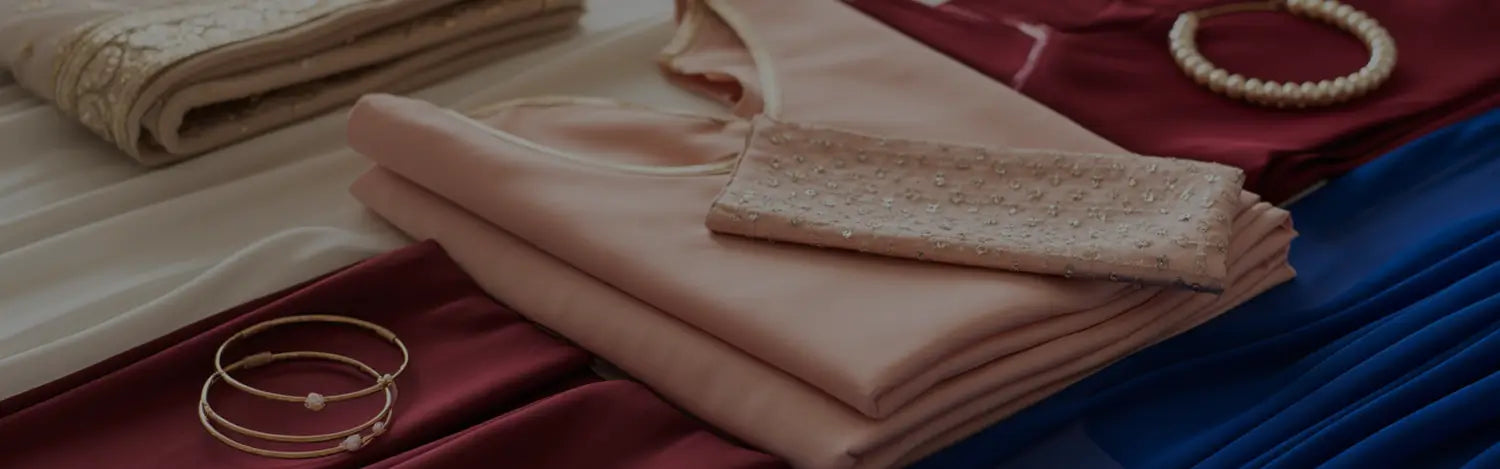

Georgette vs Crepe: Which Fabric is Better for Ethnic Wear
You've found the perfect outfit. The colour is right, the embroidery is stunning. Then you check the fabric label and you're stuck between two names: georgette and crepe. Both look beautiful in photos. Both are everywhere in ethnic wear. But they feel completely different on the body, behave differently at events, and need different care. Getting this choice wrong means spending the entire evening adjusting your dupatta or sweating through a wedding you should be enjoying.
Here's a clear breakdown of the georgette vs crepe fabric debate so you can make the right call every single time.
What Is Georgette Fabric?
Georgette is a lightweight, sheer fabric with a slightly crinkled surface texture. It's woven using highly twisted yarns, which gives it that characteristic grainy feel when you run your fingers over it. The fabric moves constantly. Even a light breeze makes it flutter, and that's exactly why designers love using it for dupattas, anarkali flares, and lehenga skirts where movement is everything.
Originally made from silk, most georgette you'll find today is polyester-based. Pure silk georgette exists and is exquisite, but it's priced significantly higher. A good quality polyester georgette still drapes beautifully and holds colour brilliantly for digital prints.
Most women find that georgette feels almost weightless on the body, which makes it a go-to choice for long events where you'll be standing, dancing, or moving between venues.
What Is Crepe Fabric?
Crepe has a flat, matte surface with a subtle pebbled texture. It's denser than georgette and has a natural body to it. The fabric doesn't flow in the same breezy way as georgette. Instead, it drapes with intention. It falls in clean, controlled lines that make silhouettes look precise and tailored.
Crepe is heavier, and that extra weight actually works in its favour. It keeps pleats sharp, holds embellishments without distorting, and skims over the body smoothly. This is why crepe fabric ethnic wear tends to look polished and put-together even after hours of wear.
The common mistake here is assuming crepe is too stiff or formal. It isn't. The right cut in crepe can be just as graceful as georgette, just with more structure.
Side-by-Side Comparison
| Feature | Georgette | Crepe |
|---|---|---|
| Weight | Very light, airy | Medium weight, structured |
| Drape | Soft, fluid, flowing | Clean, controlled, tailored |
| Surface | Slightly crinkled, grainy | Flat, matte, pebbled texture |
| Best silhouettes | Anarkalis, flared lehengas, dupattas | Shararas, straight cuts, co-ord sets |
| Wrinkle resistance | Moderate | High |
| Photography | Movement looks beautiful, slight sheen | Matte finish, colours appear rich |
| Price range | Rs.999 onwards | Rs.999 onwards |
Which Occasions Call for Which Fabric?
Choose Georgette For:
- Sangeet and mehndi functions where you'll be dancing. The fabric moves with you, not against you.
- Outdoor daytime events like haldi ceremonies or garden receptions. It breathes well and won't feel suffocating in the heat.
- Long travel days when you need to wear ethnic but also sit in a car for 3 hours.
- Petite women will find that georgette's lightness doesn't add bulk, keeping the silhouette elongated.
A georgette flowy anarkali dress is one of the most comfortable outfits you can wear to a daytime function. The flare naturally creates movement even when you're standing still, and it photographs beautifully in natural light.
Choose Crepe For:
- Evening receptions and formal dinners where you want to look sharp and composed.
- Women with a pear-shaped figure who want a fabric that skims the hips smoothly rather than clinging.
- Air-conditioned venues like banquet halls where the medium weight feels just right.
- Outfits with heavy zardozi work or mirror embellishments, because crepe holds the weight better without distorting.
A well-cut crepe sharara set hits a sweet spot between traditional and modern. The structure of the fabric keeps the wide-leg silhouette crisp, which is exactly what a sharara needs to look its best.
Fabric Care: What You Actually Need to Know
Georgette is more delicate. It can snag, stretch, or lose shape if handled roughly. Hand wash plain georgette in cold water with a mild detergent, but anything with embroidery or print work should go to dry cleaning. Don't wring it. Press it gently with a low-heat iron on the reverse side.
Crepe is more forgiving. It resists wrinkles well, so even after being packed in a suitcase, it needs minimal steaming to look presentable again. What actually works is hanging crepe outfits overnight before wearing them. Most creases fall out on their own within 8 to 10 hours.
Both fabrics should be stored in breathable cotton bags, not plastic covers. Plastic traps moisture and can damage the fabric over time, especially in humid cities like Surat or Mumbai.
How Each Fabric Photographs
This matters more than most people realise, especially for wedding functions where you know there'll be 400 photos of you by evening.
Georgette catches light. The slight sheen on the fabric surface gives your outfit a luminous quality in evening or artificial lighting. Candid photographs where you're in motion look stunning in georgette because the fabric trails beautifully. The flip side is that bright flash photography can occasionally wash out lighter georgette colours.
Crepe absorbs light. Its matte finish means colours look exactly as rich in photographs as they do in person. Deep jewel tones like emerald, burgundy, and navy look particularly striking in crepe under studio or artificial light. If you're doing a pre-wedding shoot or a styled reception look, crepe is genuinely the safer bet for consistently beautiful photos.
If you want to understand how both fabrics fit into a broader wardrobe strategy across different occasions, the complete Indian ethnic wear fabric guide covers every major fabric used in ethnic dressing today.
Budget Guide: What You Can Expect at Different Price Points
- Under Rs.2,000: Good quality polyester georgette or crepe in solid colours and basic prints. Fully functional for casual functions and day events.
- Rs.2,000 to Rs.5,000: Better fabric weight, more refined finishing, embellishment work like sequin borders or thread embroidery on both fabrics.
- Above Rs.5,000: Premium georgette with intricate chikankari embroidery or heavy zardozi work, or structured crepe with detailed handwork. This is the range where both fabrics genuinely justify every rupee.
Hansh Couture's collection starts at Rs.999, with free pan-India shipping and full-stitched options available, so you're not paying extra to get the outfit ready to wear.