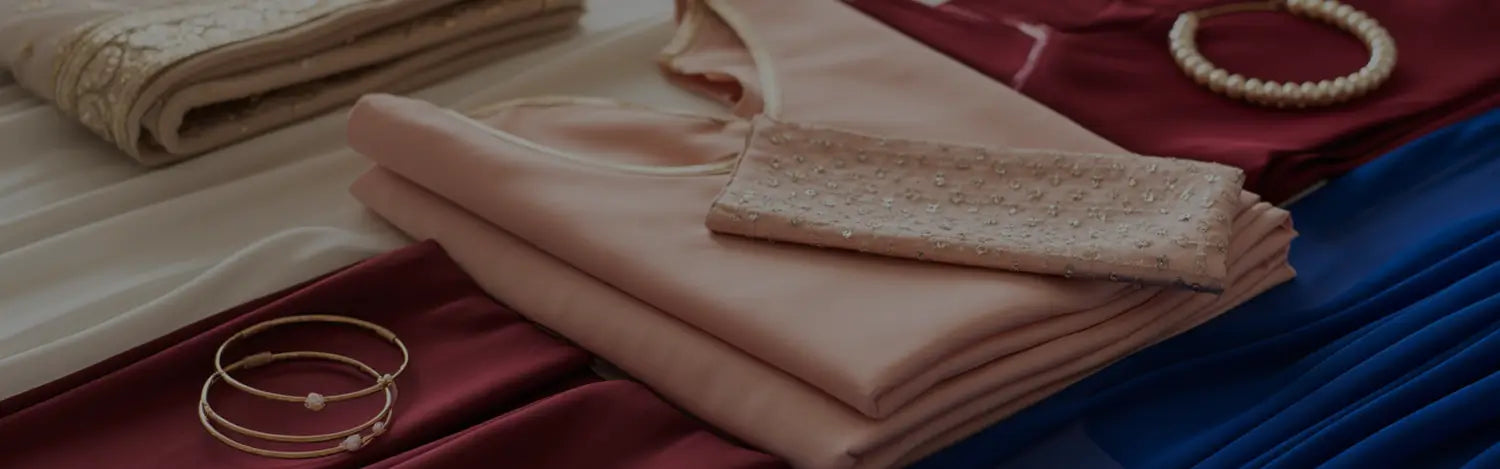

Bridal Lehenga vs Bridal Sharara: Which One Should You Choose
You've said yes. The wedding date is fixed. And now you're standing in a showroom with two stunning options in front of you, a bridal lehenga and a bridal sharara, with absolutely no idea which one to pick. Both look incredible. Both feel right in different ways. This is genuinely one of the most common dilemmas Indian brides face today, and the answer isn't as simple as "go with the lehenga because it's traditional."
The right choice depends on your body type, your wedding format, how long you'll be wearing it, and honestly, how much you want to move freely on one of the biggest days of your life. Let's break it down properly.
The Silhouette Difference: What Each Style Actually Does to Your Body
A lehenga works on a very specific visual principle. The flared skirt draws attention downward and outward, which creates a dramatic hourglass silhouette when paired with a fitted choli. The volume sits below the waist, making the upper body look proportionally slimmer.
A sharara does something completely different. The wide-leg palazzo cut starting from the hip creates a flowing, almost regal vertical line. It doesn't cinch the waist the same way a lehenga does, but it gives the entire look an airy, graceful movement that a lehenga simply cannot replicate.
- Pear-shaped brides: Lehengas with heavy embroidery on the choli and a plain skirt balance proportions beautifully
- Apple-shaped brides: A sharara with a long A-line kurta top is significantly more forgiving around the midsection
- Petite brides: High-waist lehengas add visual height; shararas need careful hem tailoring to avoid shortening the frame
- Hourglass brides: Both styles work well, but a fitted lehenga with a structured choli maximises the silhouette
The common mistake here is choosing based on what looks good on the hanger rather than on your actual body in motion. Always try both styles before deciding.
Comfort and Weight: The Part Nobody Talks About Honestly
A bridal lehenga with full zardozi embroidery and multiple layers of inner lining can weigh anywhere between 4 to 8 kilograms. That's the weight of a full bag of flour that you carry around your waist for 6 to 12 hours.
A bridal sharara, depending on fabric and embroidery density, typically weighs 30 to 40% less than a comparable lehenga. The weight is also distributed differently across the hips and legs rather than concentrated at the waist. Most women find that by the fourth hour of their wedding, they genuinely appreciate having chosen the lighter option.
If your wedding involves multiple ceremonies in a single day, floor-level rituals like phere or satphere, or a venue that requires walking on uneven ground, the comfort advantage of a sharara is very real. A lehenga's skirt volume can make it genuinely difficult to sit cross-legged or move between ritual positions quickly.
That said, if your wedding is a single grand reception where you'll mostly be seated and greeting guests, the lehenga's dramatic silhouette may absolutely be worth the extra weight.
Photography Results: What the Camera Actually Captures
This matters more than most brides realise until they see their wedding album.
Lehengas are built for photography. The skirt volume creates natural movement in twirl shots, the layers catch light differently at various angles, and the sheer scale of a bridal lehenga gives photographers strong visual material to work with. A single full-skirt twirl shot in a well-lit mandap can become the defining photograph of your entire wedding.
Shararas photograph beautifully in a very different way. They're exceptional for structured editorial poses, seated shots, and close-up detail photography where the fabric drape and embroidery are the focus. The flowing legs create elegant lines in standing shots, especially with a long trailing dupatta draped over one shoulder.
What actually works is discussing your outfit choice with your photographer before the wedding day so they can plan the right shot list for your specific silhouette. A good photographer will get stunning images from either style, but knowing in advance helps them prepare.
Traditional vs Modern: Where Each Outfit Belongs
Lehengas carry centuries of bridal tradition across most of North India, Rajasthan, Gujarat, and increasingly across South India too. At a traditional Gujarati or Rajasthani wedding, a heavily embroidered lehenga with gota patti work and a dupatta draped over the head is not just expected, it feels genuinely right for the ceremony.
Shararas have a strong Mughal and Lucknawi heritage. They're deeply associated with Muslim bridal traditions and have seen a significant revival in contemporary fashion over the last decade. Today's brides choosing shararas are often making a deliberate style statement, elegant, fashion-forward, and slightly unexpected.
For a more detailed breakdown of which outfit works for which specific Indian wedding ceremony, the complete Indian wedding outfit guide covers everything from mehendi to reception looks.
Price Comparison: What You Actually Get at Each Budget
| Budget Range | Bridal Lehenga | Bridal Sharara |
|---|---|---|
| Under Rs.2,000 | Basic printed or embroidered party lehenga, limited bridal options | Simple georgette or net sharara, good for pre-wedding functions |
| Rs.2,000 to Rs.5,000 | Semi-bridal lehenga with sequence work, good fabric quality | Well-embroidered sharara with matching kurta and dupatta, ceremony-ready |
| Above Rs.5,000 | Full bridal lehenga with zardozi or hand embroidery, multi-layer skirt | Bridal-grade sharara with heavy embroidery, premium silk or velvet fabric |
Heavily embroidered bridal lehengas typically cost more at the higher end because of the larger fabric surface area requiring embroidery work. A full 6-panel lehenga skirt needs significantly more embroidery hours than a sharara of equivalent quality.
Occasion Suitability: Matching the Outfit to the Event
Not every wedding outfit needs to be worn at the main ceremony. Understanding which silhouette works for which occasion saves you both money and decision fatigue.
- Main wedding ceremony: Lehenga is the stronger traditional choice; a bridal sharara works beautifully for nikah ceremonies and Muslim weddings
- Sangeet or mehendi: A lighter sharara in pastel or bright colours is easier to dance in and far more comfortable for 4 to 6 hours of celebration
- Reception: Both work equally well; choose based on your comfort preference for that specific evening
- Pre-wedding shoots: Lehengas give photographers more material to work with outdoors; shararas create cleaner indoor editorial shots
The Honest Recommendation
If this is your main wedding ceremony and you want the classic Indian bridal experience with dramatic photographs, significant silhouette impact, and deep cultural resonance, choose a lehenga. Browse the designer lehenga collection at Hansh Couture for options from size 34 to 44 with full-stitched availability and free pan-India shipping.
If you want to move freely, stay comfortable through a long day, and make a modern fashion statement without sacrificing elegance, a sharara is your answer. It's not the "easier" choice. It's the smarter one for many brides, and it photographs absolutely beautifully when styled well.
The truth about bridal lehenga vs sharara is that neither is universally better. Your body, your ceremony format, your comfort threshold, and your personal style are the only things that should make the final decision. Try both on. Move around in both. Sit down in both. The right answer will be obvious within 10 minutes.